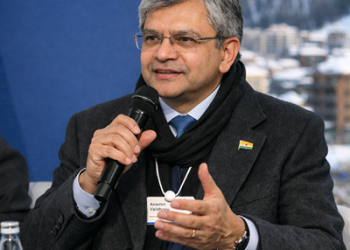



The India AI Impact Summit 2026 in New Delhi from February 16-20 will test whether the India AI Mission can deliver affordable AI compute, clarify DPDP Act compliance for developers, establish credible AI governance frameworks that scale across sectors, and offer actionable benefits to the Global South beyond rhetoric.
The summit will bring leaders from 20 countries and ministerial delegations from over 45 countries to a program built around “People, Planet and Progress,” according to India’s External Affairs Ministry.
The official website of the summit outlines an ambitious “action plan” and acknowledges some pressing concerns in its concept note. It highlights that while AI holds great potential, it can also disrupt jobs, amplify bias, and increase energy consumption.
Nevertheless, the real focus for founders and investors during the week will likely be simpler: Will India emerge from this event with a clear set of rules and the necessary infrastructure to make AI easier to develop, safer to implement, and more cost-effective to scale?
Why the market cares now
The India AI Impact Summit is set to be a significant event, with the IndiaAI Mission, AI governance discussions, and the implications of the DPDP Act taking center stage. However, what truly matters is whether India can transform this ambitious dialogue into actionable budgets, strict deadlines, and effective enforcement that endure beyond the summit’s conclusion.
The government emphasizes that the summit will focus on making a real impact, organizing its discussions around seven working-group “chakras,” such as “Safe and Trusted AI” and “Democratizing AI Resources.” While this structure reflects a strong intention, it won’t automatically eliminate compliance risks or simplify procurement processes.
The summit’s website clearly states its goal: to create a space beyond conversations and develop a concrete action plan for the future. This is crucial because India’s AI landscape is currently facing significant challenges.
Companies are eager to scale up, but they also require clear guidelines regarding training data, audits, accountability, and the appropriate use of AI by the government. Balancing these needs will be key to effectively harnessing AI’s potential in India.
Dialogue won’t fix policy uncertainty
The India AI Mission is a crucial initiative as India advances its national AI agenda while developing practical regulations for implementation. The summit backgrounder characterizes AI as a “strategic national tool” and states that the event will help guide policymakers, investors, and industry leaders in the coming years.
This promise raises expectations, particularly for startups in regulated sectors where unclear rules can freeze pilot projects, hinder enterprise deals, or delay government tenders.
In contrast, other major regions have already established clearer frameworks. For example, Europe’s AI Act employs a risk-based approach that imposes stricter obligations on “high-risk” AI and restricts certain uses.
China’s generative AI measures set requirements for providers and are part of a broader state-led digital governance model. The US has also used federal executive actions to raise expectations for AI safety and accountability, though Washington’s approach may shift with political changes.
India does not need to replicate these models but must choose its own approach and implement it swiftly.
What “direction” looks like this week
The summit’s materials already recognize a central tension: while AI has the potential to promote inclusion and growth, it can also disrupt employment, amplify bias, and increase resource costs. It is crucial for India to address this tension through concrete decisions rather than merely holding more workshops.
Founders and operators should watch for five deliverables:
- A time-bound national plan that expands affordable access to AI compute for startups, researchers, and public-sector use cases, with clear allocation rules and predictable pricing.
- A governed approach to data for AI that respects the DPDP Act while still enabling legitimate training, testing, and monitoring for bias and safety.
- Procurement standards that force transparency, logging, security testing and audit rights in government AI contracts, so buyers stop reinventing safeguards agency by agency.
- A permanent mechanism for AI governance that publishes progress and failures, instead of letting outcomes vanish into post-summit PDFs.
- A concrete offer to the Global South that goes beyond speeches, such as shared tools, playbooks, or access programs that other developing economies can actually use.
The summit backgrounder itself claims the event “marks a transition from dialogue to delivery.” India should treat that as a KPI, not a slogan.
Stay ahead of the curve and follow IndiaTechDesk on Facebook, Twitter and Linkedin for in-depth news of market trends, funding updates, and regulatory changes affecting startups in India.
Read More:
- How this Shopify Accelerator Startup is Assisting New Consumer Brands to Become Top Favorites During the Pandemic?
- India Needs More Neutral Colocation Space for Supporting AI Startups
- Kalaburagi Startup Hub Marks Bold Shift in India’s Agri-Tech Entrepreneurship
- Deeptech Startups India, Can Policy and Capital Deliver?
- Zepto IPO Filing Signals Quick Commerce Battle Moves to Public Markets