

As India supply chain AI matures, logistics automation and warehouse robots are advancing rapidly, yet without capturing the tacit knowledge embedded in human judgment, supply chain startups will keep building on a foundation that is faster, but fundamentally incomplete.
The robots are here. The algorithms are learning. But the most critical intelligence keeping India’s $354 billion logistics machine running still lives in people’s heads, and nobody is coding that out anytime soon.
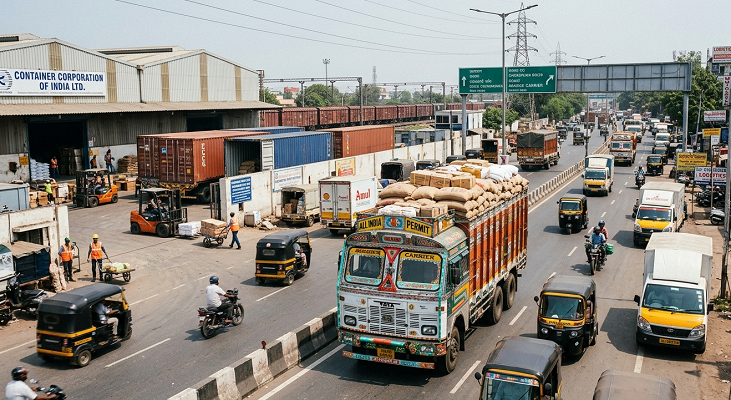
Every morning, a warehouse supervisor on the outskirts of Bhiwandi, Maharashtra’s vast logistics hub, makes dozens of judgment calls that no software has yet learned to replicate. A truck runs late. A customs document carries the wrong code.
A supplier from Surat, Gujarat’s textile powerhouse, is suddenly unavailable because of a local festival. He doesn’t learn any of this from a dashboard. He knows it because 14 years on the job have taught him how the system really works.
India supply chain AI is advancing rapidly, logistics automation is expanding, warehouse robots are sorting millions of packages daily, supply chain startups are raising serious capital, and human judgment is finally being recognized as the sector’s most undervalued and endangered resource. Yet, the deeper you look, the clearer the gap becomes between what machines can do and what people still must.
The Numbers Look Good. The Reality Is Messier.
India’s logistics sector is valued at $354 billion and accounts for roughly 18.4 percent of GDP. Logistics costs as a share of GDP have already dropped sharply, from 14 percent to just under 8 percent, driven by PM Gati Shakti infrastructure investment and digital freight platforms.
The sector is growing at 10.7 percent annually, and the government projects it will need 4.7 million additional workers by 2030.
Meanwhile, logistics automation in India sits between 25 percent and 40 percent across most procurement, documentation, and carrier-management functions — even though the technology theoretically exists to push that number past 85%. The gap is not a hardware problem. It is a knowledge problem.
“A lot of the work is not standardized yet,” says Gaurav, a supply chain professional with 16 years of operational experience at companies including Amazon India and a current angel investor mentoring over 5 early-stage founders that were selected after interacting with over 115 founders. “Getting an AI tool to translate human knowledge and figure out decisions by itself, that is not possible right now.”
What the Robots Cannot See
Here is the problem that India supply chain AI companies rarely discuss publicly: the most consequential decisions in Indian logistics are still made through instinct, relationships, and hard-won operational memory, none of which live in a training dataset.
Call it tacit knowledge. It is the customs broker who knows which classification will sail through clearance. It is the procurement manager who can gauge supplier reliability from a tone of voice. It is the floor supervisor, the one on the phone at 2 am, who knows the sortation system misbehaves after midnight. Logistics automation can route a package. It cannot replicate that.
Furthermore, India’s supply chain structure makes knowledge capture uniquely difficult. Nearly 80 percent of India’s trucking operators run fleets of fewer than 10 vehicles. A large share of supply chains still move through informal, undocumented channels, are fragmented and unstructured, and are mostly invisible to AI systems that need clean data to learn from.
“If your training data set is not authentic, is not original, is already developed by AI, then automatically the level of hallucination is going to be that much higher,” Gaurav notes. The principle is old, but the stakes are new: garbage in, garbage out, and right now, much of what India’s supply chains run on is undocumented human judgment, not structured data.
A $354 Billion Sector Running on Institutional Memory
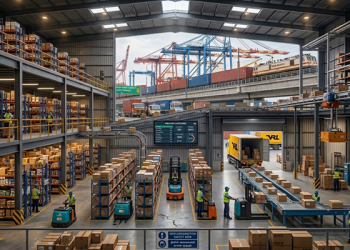
Supply chain startups building in India face a structural paradox. Warehouse robots can sort 50,000 packages a shift. Companies like GreyOrange and Falcon have already deployed robotic fulfillment systems inside Flipkart’s sortation centers.
Flexport is building AI to decode the black box of customs paperwork. In February 2026, India’s CBIC introduced reforms to paperless clearance and risk-based customs examination, meaningful steps toward transparency.
Yet, none of these systems has solved what Gaurav describes as the “Toyota problem.” When Amazon India scaled its logistics network, it applied lean manufacturing logic: separating value-added from non-value-added work, standardizing what repeats, and automating the standardized. Robotic process automation followed. Now AI is taking on cognitive load.
But that method works only where processes are clean enough to standardize. Geopolitical rerouting, like the decision to redirect cargo around Africa’s Cape of Good Hope when West Asia tensions shut down the Strait of Hormuz route, stretching an 8-day journey to 45 days, does not fit neatly into a workflow diagram.
Exception handling, supplier risk assessment under uncertainty, and last-minute rerouting: these decisions still require human judgment in the loop.
“Supply chain is probably going to be the last frontier where significant inroads by AI may happen,” Gaurav says. “It might be a good place to start, because you have to do a lot of the hard work.”
The Clock Is Ticking
Here is the urgency that most industry forecasts skip. India’s logistics sector faces a shortage of 4.7 million workers by 2030. Simultaneously, the generation of senior supply chain managers, whose heads hold decades of hard-won operational knowledge, is aging out. If that tacit knowledge is not captured and codified before it leaves, India’s logistics AI will train on the wrong curriculum.
The supply chain startups that understand this are not just building dashboards or automation tools. They are building knowledge-capture systems: human-in-the-loop frameworks that learn from experienced operators rather than replacing them. That distinction, between automating process and encoding judgment, is where India’s next serious logistics companies will emerge.
“Unless you have a motivation that actually gets you up every morning to go through the grind,” Gaurav says, describing what he looks for in founders, “people are going to say no to you.” He applies that same filter to the sector itself. The companies that do the hard, unglamorous work of understanding Indian supply chains, relationships, exceptions, informality, and all, will build the most defensible businesses.
The warehouse supervisor on the road is still on his phone. The algorithm is still learning. The gap between them is not closing as fast as the headlines suggest, and that gap, for the right founders and investors, is the actual opportunity.
Stay ahead of the curve and follow IndiaTechDesk on Facebook, Twitter and Linkedin for in-depth news of market trends, funding updates, and regulatory changes affecting startups in India.
Read More:
- India Becomes the First Major Economy to Regulate Deepfakes
- Aksum, a Supply Chain as a Service Platform, Secured $1 million
- Funding Winter Forces Indian Startups to LayOff Thousands Amid Economic Downturn
- Y-Combinator backed SaveIN Secures $8 million Over Nine Months
- Funding Winter Chills Indian Startups, Valuations Slide as Unicorns Dwindle