

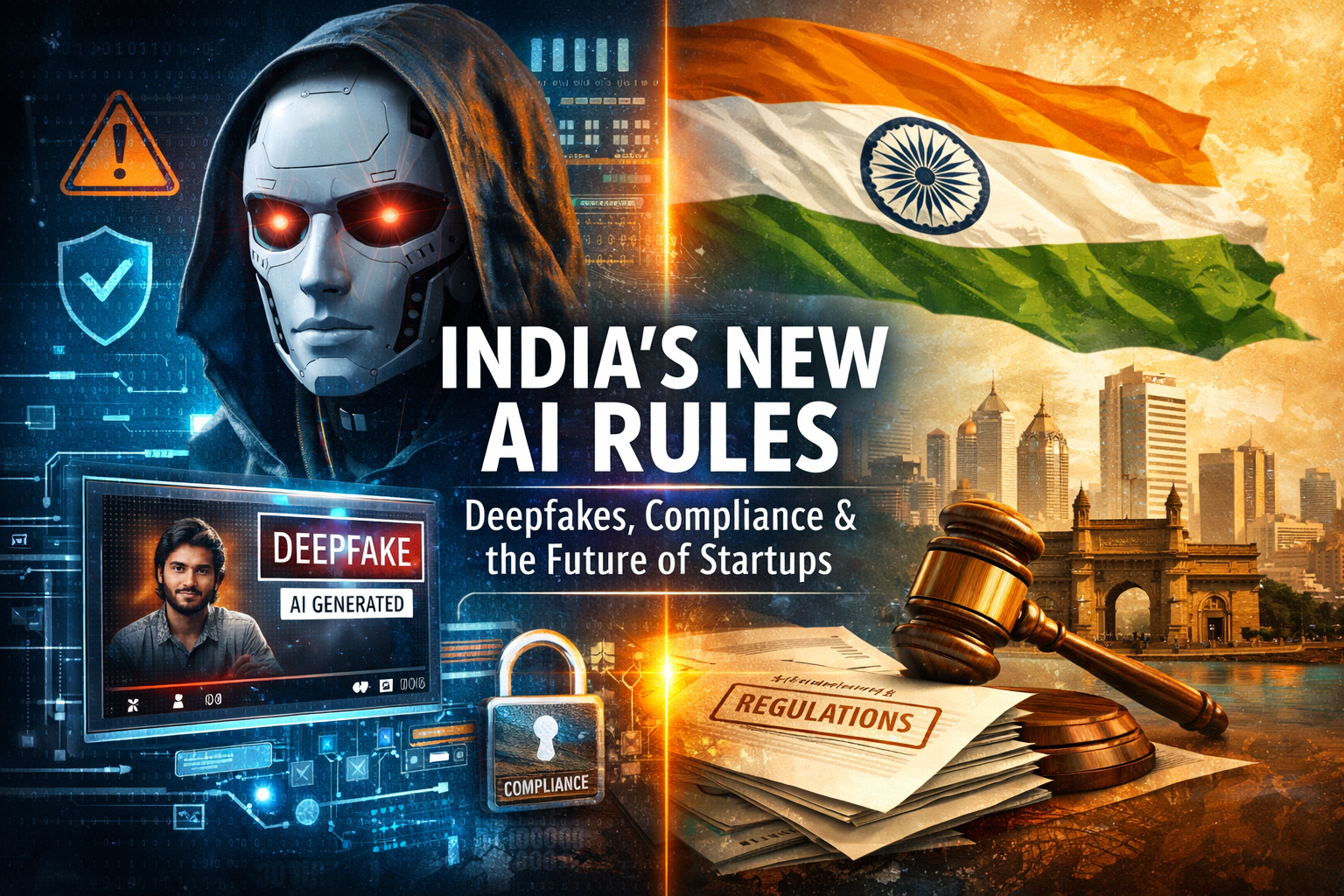
On February 10, 2026, India’s Ministry of Electronics and Information Technology took a significant step by announcing new synthetic content regulations that include strict rules on deepfakes, requiring content to be watermarked and verified as AI-generated, which will significantly change the responsibilities of intermediaries and place compliance challenges on startups, ultimately influencing which companies can thrive in the country’s vast digital market.
The Information Technology (Intermediary Guidelines and Digital Media Ethics Code) Amendment Rules, 2026, establish the world’s first official framework to govern deepfakes and AI-generated content. These synthetic content regulations will take effect from February 20, 2026.
The new synthetic content regulations will open up opportunities in the compliance technology market. Overall, this could lead to a significant evolution of India’s generative AI landscape, balancing innovation with necessary oversight.
The recent notification from MeiTY follows the DPDP Act, which is likely to increase compliance costs for startups that manage personal data. In the short term, these regulations can be burdensome, but there’s a silver lining. By prioritizing privacy from the start, ensuring their AI outputs are traceable, and adopting ethical data practices, startups can build a strong foundation.
This proactive approach not only helps them navigate regulatory challenges but also boosts their credibility with investors, fostering long-term resilience. By embracing these changes early on, startups can position themselves to thrive in a competitive landscape.
The Regulatory Inflection Point
The recent changes made by MeitY to the IT (Intermediary Guidelines and Digital Media Ethics Code) Rules, 2021, aim to address the growing issue of “synthetically generated information.” This term includes all types of content, such as deepfakes, AI-generated voice clones, lifelike images, and even text that appears to come from official sources, that has been created by algorithms but appears real.
These new regulations come in response to rising concerns about misleading content during elections and the sharing of intimate images without consent. However, the government is taking a broader approach, focusing not only on preventing specific harm.
Instead, they are establishing a thorough set of rules that recognizes the importance of regulating synthetic content as a central issue in internet governance, rather than treating it as a minor detail in content moderation.
Two-Tier Compliance Trap
The new regulatory framework divides responsibilities between all types of digital platforms and those classified as Significant Social Media Intermediaries (SSMIs). However, this setup might inadvertently create challenges for startups.
Under the latest rules, any platform that features tools for generating synthetic content, regardless of size, must include permanent watermarks or metadata on at least 10 percent of its visual content or audio.
Importantly, these markers must be non-removable by users. A small generative AI startup with just five team members faces the same strict watermarking rules as major companies such as Adobe and OpenAI.
On the other hand, platforms with over 5 million users, known as SSMIs, have additional obligations. They are required to collect user declarations regarding AI-generated content, use “reasonable and appropriate” automated tools to verify these declarations, and ensure that confirmed synthetic content is prominently labeled.
Adding to the pressure, the government has shortened takedown timelines to three hours for certain cases, a significant decrease from the previous 36 hours.
This dual set of requirements is often referred to by legal experts as a “regulatory tax on scale.” Startups need to invest heavily in detection infrastructure even before they start generating substantial revenue, only to find themselves facing the same compliance challenges again once they reach that SSMI level.
Furthermore, the lack of clear technical guidelines on what counts as “reasonable” verification measures leaves startups at risk of inconsistent enforcement.
Sector-Specific Shockwaves
The new regulations surrounding synthetic content are set to change the game for various startup categories. Companies that rely on generative AI tools, such as those that create images, videos, or digital voices, are facing significant design challenges. They now need to build permanent watermarking into their processes to ensure authenticity.
For businesses that offer these as APIs, this might mean adding watermarks at the foundational level or shifting compliance responsibility to their customers. Unfortunately, this could deter adoption among businesses that are cautious about potential liabilities.
Social media platforms and user-generated content networks are also reevaluating their growth strategies. Apps focused on dating, short videos, or community building will now have to factor in costs for declaring AI-generated content, developing detection technologies, and implementing labeling systems before they can expand.
Investors are increasingly requesting “SGI roadmaps” in the early stages of funding, viewing compliance infrastructure as essential from the outset rather than something to address later.
For creators and media startups, there’s a mixed bag of opportunities and challenges. Businesses that provide tools for influencers or AI-generated avatars will need to be more vigilant about personality rights and impersonation.
Meanwhile, services that detect deepfakes and watermark content are likely to find a growing market. News startups face pressure to establish trust and authenticity, especially in distinguishing real journalism from synthetic misinformation.
In the fintech space, companies that handle identity verification are also feeling the impact, albeit indirectly. Services such as video KYC and fraud prevention must now comply with synthetic content regulations. Regulators are increasingly demanding authentication processes that can withstand deepfake threats, which means these companies must integrate these considerations into their core offerings.
The Enforcement Wildcard
Notably, the rules leave critical implementation questions unanswered. The government has not specified acceptable watermarking standards, published approved detection models, or clarified how “prominent” labeling differs across contexts. This ambiguity gives enforcement agencies wide latitude but also creates legal uncertainty that could chill investment.
Furthermore, the framework inherits constitutional vulnerabilities from earlier IT Rules litigation. Civil society groups argue that mandating proactive content verification pushes platforms toward general monitoring, which India’s Supreme Court prohibited in Shreya Singhal v. Union of India. If courts strike down or narrow the verification requirements, SSMIs may gain unexpected breathing room, but the watermarking obligations rest on firmer legal ground.
Strategic Implications
For founders navigating the current landscape, three main strategies are emerging. First, some startups may decide that the risks associated with intermediary liability are too high, prompting them to shift their focus to purely B2B infrastructure. Instead of hosting content, they’ll focus on offering solutions such as detection and watermarking technologies.
Second, some view compliance as a competitive advantage. By obtaining “SGI-ready” certification, they can differentiate themselves in the enterprise and government sectors, demonstrating to potential clients that they prioritize regulatory compliance.
Lastly, some startups might choose a more cautious approach, deliberately limiting their growth in India. By staying below certain thresholds, they can avoid the more burdensome obligations of the rule, allowing them to operate with fewer regulatory pressures.
For investors, this shift introduces a new layer of due diligence. Any startup involved in content creation or hosting will now need a thorough legal review to assess its SGI exposure. It’s becoming common for term sheets to include warranties around regulatory compliance and indemnities against government actions.
These developments extend far beyond India’s borders. As the first major economy to establish binding regulations on synthetic content that include specific technical requirements, India’s approach is likely to shape regulatory frameworks in regions such as Southeast Asia and Africa. It may also influence the implementation of the EU’s AI Act. In essence, India is quickly becoming a testing ground for compliance, with global implications for AI startups.
Stay ahead of the curve and follow IndiaTechDesk on Facebook, Twitter and Linkedin for in-depth news of market trends, funding updates, and regulatory changes affecting startups in India.
Read More:
- PM Modi Urges Focus on Real-World AI Impact, Says India Has No Time for ‘AI Toys’
- India Deep Tech Startups Face $626M Funding Drought
- India Chooses Scale Over Supremacy in Global AI Race
- Growth Is No Longer Enough, Capital Efficiency Becomes Venture Capital’s New Filter
- India Unlocks 6 GHz Spectrum, but Only Rich WiFi Startups Will Benefit