

India AI talent shortage is an acute paradox as the world’s largest producer of engineering graduates cannot fill its own AI job openings, forcing the government to bet on youth-led AI development through student innovation competitions targeting sustainability challenges to address a widening AI skills gap that threatens the country’s ambitions as a technology superpower.
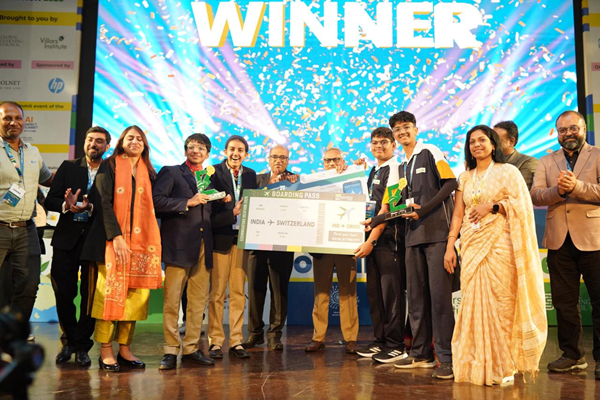
The EcoInnovators Ideathon 2026, a national student innovation challenge focused on Artificial Intelligence for sustainability, successfully concluded in January with 5,500 participants across 23 states, exposing both the scale of India’s future AI talent and the government’s unconventional strategy to solve it.
Organised by the Global Learning Council (GLC), headquartered at the Villars Institute in Switzerland, in partnership with Schoolnet India Limited, Axilor Ventures, and Pratithi Investments, the Ideathon aimed to empower India’s youth to develop AI-driven solutions to address pressing environmental challenges.
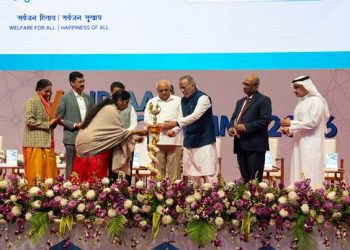
Dr. Subra Suresh, Founder and President of the Global Learning Council, said, “As a Pre-Summit Event of the IndiaAI Impact Summit, the EcoInnovators Ideathon highlights how youth-led innovation can advance responsible AI for social good that will improve quality of life for future generations.”
Instead of waiting for universities to fix broken curricula, the Ministry of Electronics and Information Technology officially recognizing the student competition as a pre-summit event for the IndiaAI Impact Summit in February, elevates 17-year-olds building apps to the same strategic tier as billion-dollar infrastructure announcements.
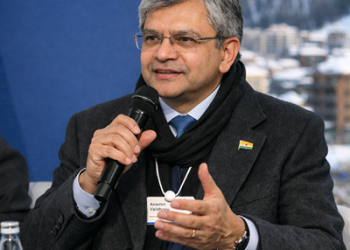
Abhishek Singh, IAS, Additional Secretary, MeitY, Government of India, and CEO, IndiaAI Mission, who, while complimenting the Global Learning Council and Schoolnet India Limited, said, “The government’s support for such events reinforces our commitment to nurturing India’s future-ready AI talent aligned with the People–Planet–Progress agenda.”
The Market Context
India’s AI skills gap has created a seller’s market for scarce talent. Generative AI engineers and machine learning operations specialists now command salaries exceeding INR 60 lakh ($72,000) annually for senior roles, an 18 percent year-on-year increase that signals desperation, not equilibrium. Companies report that one qualified engineer is available for every 10 open GenAI positions.
This collapse in supply relative to demand stems from structural educational failure, not temporary market friction. The Mercer-Mettl India Graduate Skill Index 2025 found that only 42.6 percent of all graduates are employable by industry standards, a decline from 44.3 percent the prior year, indicating a worsening trajectory.
Ninety percent of engineering graduates lack programming and algorithmic skills required by IT product companies, forcing employers to invest heavily in post-hire training that erodes competitive advantage.
“India produces engineers in volume, but not capability,” explained a senior hiring manager at a Global Capability Center in Bangalore who requested anonymity. “We’re spending 6-8 months making graduates productive. That’s not sustainable when AI is moving this fast.”
The numbers reveal why panic has set in. India faces a projected deficit of 1.1 million AI professionals by 2027, despite anticipating 2.3 million job openings, according to workforce analytics from TeamLease Digital and industry assessments.
More damning is that only 2.5 percent of Indian engineering graduates possess AI skills, and a mere 9.9 percent can write functionally correct code, the baseline requirement for any technical role.
“We need a national skilling movement on AI, the way we had for digital literacy,” Ex NASSCOM President Debjani Ghosh warned mid-2025. “This is the decade of AI, and India must lead.”
Why the Government Turned to Students
Against this backdrop, the EcoInnovators Ideathon represents a strategic intervention at scale. Organized by the Global Learning Council, founded by Subra Suresh, former Carnegie Mellon President, in partnership with Schoolnet India, the competition deliberately targeted Grades 8-12 for the school track and undergraduates for the college track.
The design philosophy breaks with traditional tech education. School participants built functional mobile and web applications using low-code/no-code “vibe coding” platforms, tools that enable software development through visual interfaces rather than manual coding. This democratization of technology matters: it shifts pedagogy from “learn to code first, then innovate” to “innovate using accessible tools, then deepen technical understanding.”
“The objective is not to create child programmers but informed, conscious technology users who understand how intelligent systems work,” explained researchers studying India’s curriculum reform, which introduces AI education from Grade 3 starting academic year 2026-27.
College participants tackled a strategically vital problem of developing machine learning models to detect rooftop solar installations from satellite imagery. This directly serves India’s renewable energy ambitions.
The country has committed to installing 500 gigawatts of solar capacity by 2030, requiring $300 billion in investment. As of January 2025, only 16.3 gigawatts of rooftop solar capacity exist, far short of the 30-gigawatt target by fiscal year 2027. Rapid, accurate identification of potential installation sites becomes mission-critical infrastructure.
By positioning college students on genuine policy-relevant problems rather than toy exercises, the Ideathon generates potentially deployable solutions while building skills. Winners from Rajalakshmi Engineering College and IIT Madras will present their solar detection models at the Villars Symposium in Switzerland this June—demonstrating Indian student work meets global standards.
The Real Impact
The Ideathon’s significance extends beyond individual winners. It signals India’s recognition that top-down policy alone cannot solve the AI talent shortage. The government launched “YUVA AI for ALL” in November 2025, a free 4.5-hour course aimed at 10 million citizens that covers foundational AI concepts. Within two weeks, 100,000 students enrolled. By the February summit, officials expect one million learners.
“The primary objective is to demonstrate how India can deploy AI responsibly, at scale, and for public benefit,” said Abhishek Singh, Additional Secretary at MeitY and CEO of the IndiaAI Mission, in a recent interview. “Success will be reflected in increased global investment in Indian AI startups.”
The geographic distribution offers more promise. By reaching government and private schools across 23 states, not just metropolitan tech hubs, the initiative surfaces diverse problem-solving approaches and significantly expands the talent pool. Winners included teams from Chandigarh’s Bhavan Vidyalaya and Nashik’s Espalier Heritage School, alongside expected powerhouses like IIT Madras.
“It is encouraging to see young people across India applying AI thoughtfully to sustainability challenges,” said Kris Gopalakrishnan, Infosys co-founder and Global Learning Council advisory board member. “Initiatives like the EcoInnovators Ideathon help build originality, responsibility, and real-world solutions.”
What Founders and Investors Should Watch
The ideathon reveals three strategic signals for the startup ecosystem. First, India’s government increasingly views youth-led AI development as infrastructure rather than enrichment. The formal recognition as a pre-summit event indicates student innovation sits at the policy table, not the kids’ table.
Second, sustainability challenges offer the most accessible pathway for AI talent development aligned with national priorities. Agricultural optimization, water management, and renewable energy assessment—these domains combine genuine problems, available datasets, and policy urgency.
Third, low-code and no-code platforms are reshaping who can build AI applications. Investors who underestimate this democratization risk miss how the next generation of founders is developing technical literacy. The school track winners built production-quality apps without traditional coding, a capability shift with profound implications for startup formation patterns.
The initiative was supported by a robust ecosystem of partners, including IIT Madras (Centre for Responsible AI), Center for Study of Science, Technology and Policy (CSTEP), and Infosys Springboard, bringing together expertise from academia, industry, and the AI startup ecosystem.
India’s AI talent shortage reflects a decades-long failure in educational infrastructure. No single initiative reverses that trajectory. But events like EcoInnovators Ideathon demonstrates a government willing to experiment with unconventional pathways.
Stay ahead of the curve and follow IndiaTechDesk on Facebook, Twitter and Linkedin for in-depth news of market trends, funding updates, and regulatory changes affecting startups in India.
Read More:
- How this Shopify Accelerator Startup is Assisting New Consumer Brands to Become Top Favorites During the Pandemic?
- India Needs More Neutral Colocation Space for Supporting AI Startups
- Kalaburagi Startup Hub Marks Bold Shift in India’s Agri-Tech Entrepreneurship
- Deeptech Startups India, Can Policy and Capital Deliver?
- Zepto IPO Filing Signals Quick Commerce Battle Moves to Public Markets