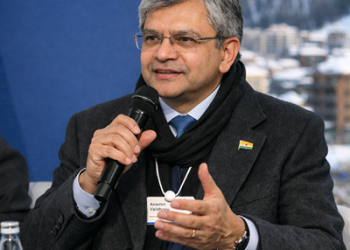


AI-generated deepfakes threaten individual identity at scale, and India’s technology and legal systems must converge fast to stop them, said Deepak Goel, a Scientist in Cyber Law and Data Governance under the Ministry of Electronics & Information Technology (MeitY), during a policy discussion at the India AI Impact summit.
India is set to see significant changes in its digital landscape with the upcoming implementation of amendments to its IT Rules on deepfakes. These changes come alongside the phased rollout of the Digital Personal Data Protection Act, 2023, which is still awaiting some additional guidelines.
Additionally, the much-anticipated Digital India Act, which aims to consolidate various rules governing digital governance, has yet to be introduced in Parliament.
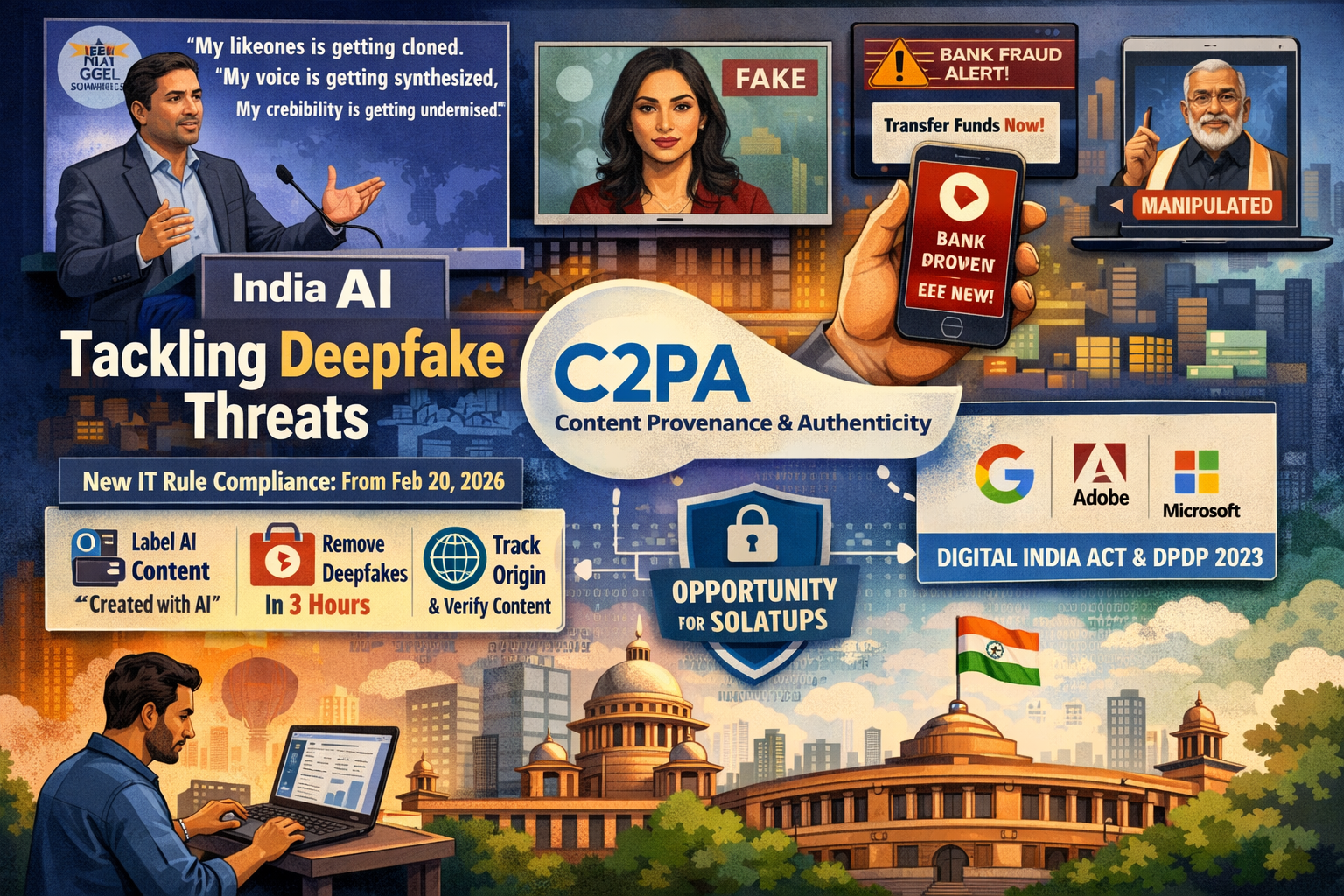
One key date to remember is February 20, 2026, when the Ministry of Electronics & Information Technology (MeitY) expects platforms to fully comply with a comprehensive amendment to the Information Technology (Intermediary Guidelines and Digital Media Ethics Code) Rules from 2021.
This amendment will require platforms to not only label synthetic content as such but also respond to government requests to remove deepfake content within a three-hour timeframe. These regulations reflect a growing recognition of technology’s impact on society and the need to ensure accountability for digital content.
For startup founders building on generative AI, and for investors writing the checks, this is not a regulatory footnote. It is a product constraint, a liability signal, and, if you know how to read it, a massive opportunity.
The Problem India Is Trying to Solve
Imagine this scenario: A person in Mumbai receives a voice note from their bank manager. The voice sounds just like the manager’s, with the perfect accent, and the request to transfer funds to a “secure account” seems completely legitimate. But here’s the catch: it’s all a clever fake.
This situation highlights a growing concern in India. Deepfakes, which are audio, video, and images created or manipulated by AI to impersonate real people, have shifted from being a tool for Hollywood special effects to a serious threat in our daily lives.
They’re being used for fraud, election manipulation, and even personal abuse. With about 900 million internet users and many first-time smartphone owners, India finds itself particularly vulnerable to this wave of deception. It’s a pressing issue that the country is racing to tackle.
“My likeness is getting cloned. My voice is getting synthesized. My credibility is getting undermined. My decisions are getting manipulated,” said Deepak Goel at the India AI Impact Summit 2026 in New Delhi. “How do we empower the individual so that what belongs to them doesn’t get undermined in any way?”
Goel was speaking alongside policy officials from Adobe and Google. He did not have all the answers. But the direction India is heading is now unmistakably clear, and it will fundamentally change how AI products are built and funded.
This Is Not Your Typical Content Moderation Story
Here is what makes India’s approach genuinely different from the flood of global AI regulation. MeitY is not just trying to delete bad content after the fact. It aims to verify content before harm spreads.
“Government is normally known for taking content down,” Goel said. “But this is not about content moderation. It is about verifiability, accountability, and keeping the citizen at the center of the trust model.”
That is a significant philosophical shift. And it points directly at a technical standard that is quietly becoming one of the most important acronyms in AI policy: C2PA.
The Coalition for Content Provenance and Authenticity (C2PA) is an innovative initiative designed to ensure transparency in the digital content we consume today. Imagine it as a digital birth certificate for every piece of content — whether it’s an image, video, or audio — that tells us who created it, when it was made, and what tools were used in its creation.
This metadata is securely embedded at the source, making it tough to alter or fake, ensuring that the original creator is recognized and acknowledged.
At the recent India AI Impact Summit, C2PA took center stage in a broader discussion on establishing accountability in AI technologies. Gael Kent from Google highlighted the importance of this framework, describing it as not just secure but also enabling users to easily trace the origins and evolution of content.
Google also introduced its SynthID watermarking tool, which complements C2PA by offering an additional layer of verification across various media types. With strong backing from major players like Adobe, Microsoft, and the BBC, C2PA represents a significant step forward in maintaining the integrity of digital media.
“C2PA is not a silver bullet,” said Sameer Boray, Senior Policy Manager at the Information Technology Industry Council. “It is not a perfect solution, but it is a solution and a good start.”
For startup founders, that sentence is worth printing and taping to the wall. Imperfect solutions that are adopted at scale become standards. And standards become regulatory expectations.
The Virality Problem Nobody Is Talking About Enough
Goel raised something that most regulatory discussions miss entirely.
“The issue is not just content creation,” he said. “The issue is virality. If content doesn’t get disseminated, it stays between two people, and nobody objects. But can we create a mechanism that restricts amplification when content goes viral?”
The landscape for recommendation algorithms is changing, and it’s important to pay attention. It’s not just about the content being shared but also the systems that help spread it. While India hasn’t fully established regulations yet, a clear direction is emerging: platforms that quickly amplify synthetic media could be held responsible for the fallout it causes.
For entrepreneurs working on social apps, short-video platforms, AI-driven news aggregators, or any service that provides a feed, this should be a warning sign. The upcoming compliance requirements may go beyond simple content labeling; they could involve limiting the visibility of certain posts. It’s time to start thinking proactively about how these changes might affect your products and strategies.
What Founders Must Do Right Now
India’s new regulations, effective from February 20, introduce several key responsibilities for intermediaries—essentially any platform that deals with user-generated or AI-generated content. If your platform operates in India and handles synthetic media, here’s what you need to know about the new compliance requirements:
- Label Synthetic Content: If your platform creates or hosts AI-generated images, videos, or audio, you must clearly disclose this fact. Simply marking it as “Created with AI” is the minimum you need to do, and you should consider more comprehensive labeling.
- Respond Quickly: You’ll need to establish a robust response system. If the Ministry of Electronics and Information Technology (MeitY) or another designated authority flags deepfake content on your platform, you have just three hours to take it down. This isn’t just about customer service; it’s a critical operational requirement.
- Track Origin: Keep detailed records of when AI content is generated, which model was used, and the tools involved. Authorities may request this information, and it’s becoming increasingly important to investors as well.
- Set Up a Grievance Mechanism: Under India’s IT Rules and the Digital Personal Data Protection Act of 2023, users have the right to file complaints about impersonation and misuse of identity. You need a clear process in place to handle such complaints.
For early-stage founders, this might seem daunting because the compliance landscape is indeed vast. However, it’s important to remember that India is promoting a principle-based approach, which means that while it outlines the goals, it allows businesses the flexibility to determine the best technical solutions to meet these requirements. This flexibility can give you the opportunity to innovate while ensuring compliance.
This Is a Market Signal, Not Just a Risk Flag
India’s new regulations around deepfakes are not just about compliance; they’re paving the way for something much bigger: a whole new category focused on building trust.
Think of it like India Stack, which brought us innovations like Aadhaar, UPI, and DigiLocker, sparking a wave of startups that capitalized on verified identities and payment systems. Similarly, India’s emerging “trust stack” for synthetic media could transform the landscape of content authenticity.
Right now, under the government’s guidance, global tech giants are working to standardize this layer. There’s a huge opportunity for developers to create tools in Indian languages to verify content, build compliance dashboards, and develop APIs to detect deepfakes across various dialects.
John Miller, a Legal and Government Affairs Executive at the Information Technology Industry Council, put it well: “In an era where synthetic media is booming, understanding where content comes from is crucial for fostering transparency and accountability. It’s not just about moderation or censorship; it’s about adding verifiable context to what we see.”
Startups that take the initiative to create C2PA-compliant systems, user-friendly provenance tools, or tailored compliance solutions for sectors such as finance, media, or government will likely have a significant edge when selling to enterprises and government agencies.
For investors considering Indian AI companies, it’s important to ask relevant questions. Does this company have a solid story around provenance? Can they respond within three hours? Are they compliant with the DPDP regulations for obtaining consent regarding synthetic features?
Stay ahead of the curve and follow IndiaTechDesk on Facebook, Twitter and Linkedin for in-depth news of market trends, funding updates, and regulatory changes affecting startups in India.
Read More:
- India Becomes the First Major Economy to Regulate Deepfakes
- Deeptech Startups India, Can Policy and Capital Deliver?
- India’s Climate Unicorns Rise on Renewable Energy and Smart Policy Moves
- India Chooses Scale Over Supremacy in Global AI Race
- Government of India’s Drone PLI Scheme to Buoy the Sector towards Future Growth