

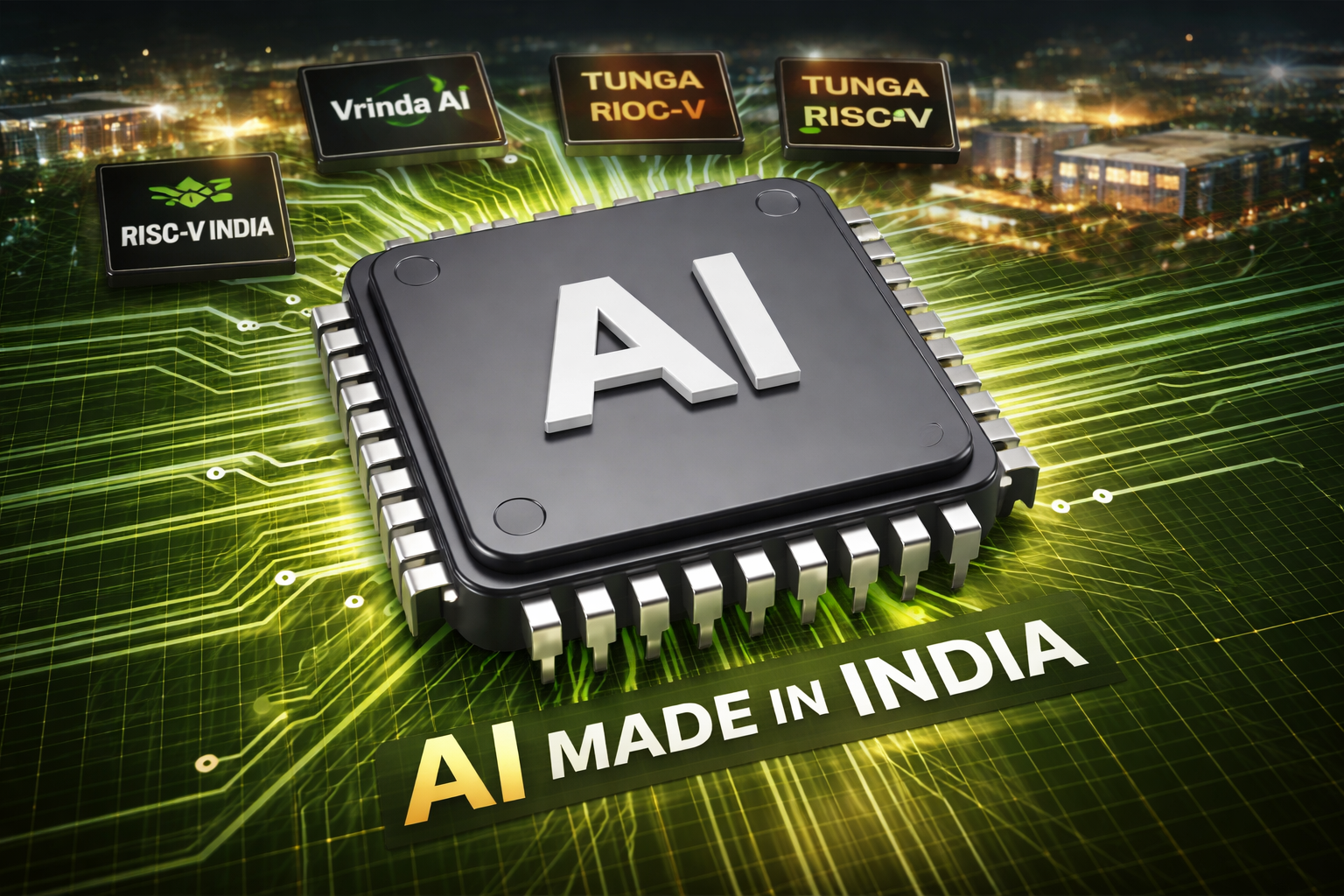
India’s homegrown AI chip startups are challenging Silicon Valley’s dominance, armed with government subsidies, RISC-V architecture, and a $150 billion domestic market no one can afford to ignore. Indian AI chip startups have come a long way and are now making their mark in the global semiconductor scene. Instead of being overlooked, they’re carving out their own space, and it seems the world is finally taking notice.
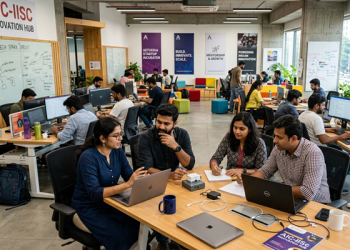
Over 30 startups across the country are diving into the design of artificial intelligence chips. This growth is fueled by supportive government policies, a pool of top-notch engineering talent, and a booming domestic market that’s expected to hit $150 billion in semiconductor demand by 2030.
It’s a figure that would have sounded unbelievable just five years ago, but now it feels like a challenge they’re eager to meet.
A Policy Bet That Is Paying Off
The Indian government’s Design Linked Incentive (DLI) scheme, launched in 2022, has become a crucial part of the country’s push into advanced semiconductor technology. By mid-2025, New Delhi had given the green light to 23 chip design projects and provided 72 companies with access to high-quality.
Electronic Design Automation (EDA) tools—essentially the software that transforms innovative circuit concepts into real, manufacturable chips. Without these DLI subsidies, many startups might have run out of funds before they even had the chance to produce their first chips.
Shashwath T R, the CEO and co-founder of Mindgrove Technologies, an AI chip startup that emerged from IIT Madras, expresses optimism about the industry. “India consumes over a billion chips a year,” he notes, pointing out that between 10 and 50 million of those could potentially be replaced by domestically designed chips.
Mindgrove’s recent announcement of their new vision SoC, called the V2600, is particularly exciting. Designed for edge AI surveillance cameras and expected to launch commercially in late 2026, it marks a significant step for India’s AI chip startups as they transition from the experimental phase to market deployment.
What These Startups Are Actually Building
India’s chip designers are tackling a much tougher challenge than the typical “AI startup” label often applied to companies working on chatbots. They’re focused on creating the actual hardware—silicon chips—that power AI models, and this is a significant distinction.
For instance, Mindgrove Technologies, based in Chennai, is making strides with its RISC-V System-on-Chips (SoCs) specifically designed for edge AI applications. They’re working on a variety of applications, from surveillance cameras to electric vehicle battery systems, and doing so at a cost about 30 percent lower than many international competitors.
Another impressive player is InCore Semiconductors, a spin-off from IIT Madras. They’ve developed the “Vrinda AI” chip, enabling on-device machine learning for devices like smartphones and hearing aids. This means users can benefit from AI features without relying on cloud services.
Then there’s Morphing Machines in Bengaluru, which is exploring innovative neuromorphic AI accelerators. They’re using reconfigurable architectures for low-power applications, a smart move given how inefficient traditional chips can be in terms of energy consumption.
In Kerala, Netrasemi is embedding a dedicated Neural Processing Unit (NPU) into its SoCs, focusing on areas such as surveillance, robotics, and drones, where processing speed and efficiency are crucial.
Tattvam AI is the fresh face in this lineup, having recently raised $1.7 million in pre-seed funding to innovate the chip design process itself using AI, which could dramatically shorten timelines that traditionally stretch over several years.
On another groundbreaking note, CalligoTech recently introduced TUNGA, hailed as the world’s first Posit-enabled RISC-V CPU tailored for AI and high-performance computing. This achievement positions India among a select few nations capable of developing next-generation computing architecture from scratch.
The Capital Signal Is Clear
Investor interest in Indian semiconductor startups has skyrocketed, jumping from just $5 million in 2023 to over $28 million in 2024. That’s a remarkable 460 percent increase in just one year! This significant growth has certainly caught the attention of major players in the tech industry.
In February 2026, Nvidia made a strategic move to deepen its presence in India by partnering with venture capital firms such as Accel, Peak XV, and Elevation Capital. Together, they’re on the lookout for the next wave of AI chip startups. NVIDIA is already backing more than 4,000 Indian startups through its Inception program, showing its commitment to fostering innovation in the region.
In addition, tech giants like Amazon, Microsoft, and Google have banded together to commit over $50 billion to bolster AI infrastructure in India. Meanwhile, Reliance’s Jio has ambitious plans to invest $110 billion in AI development over the next seven years.
These investments are more than just altruistic acts; they signify a strong belief that India can evolve into a major hub for chip design, moving beyond its reputation as merely a place for outsourcing code.
The Fabrication Gap — And Why It Still Stings
Let’s be honest about something most press releases overlook: while India excels at chip design, it still depends heavily on Taiwan and South Korea for manufacturing. Every AI chip that Indian companies design must travel thousands of miles to factories like TSMC or Samsung for processing before it can be used in devices.
This dependence creates significant risks. Remember the 2021 global chip shortage? When factories shut down, production of cars and smartphones halted, and smartphone releases were delayed. India is making strides to build its own semiconductor factories, like Tata’s plant, which is expected to begin production around 2027. However, until that goal is realized, the country’s ambitions in the AI chip arena rely on facilities abroad.
Why This Moment Is Different
India has been on the semiconductor promise train before, but 2026 feels different. This time, there’s real evidence of progress: commercial chips are making their way to market, startups are getting funded and actually shipping products, and global tech giants are investing billions to be part of this journey.
A key part of this transformation is the DLI scheme, which recognizes that a robust chip industry relies heavily on well-trained engineers capable of designing chips. And it’s working; seventy-two companies now have access to the same high-quality design tools that Intel and Qualcomm use. Sure, not all of them will make it, but a few could really shape what “Made in India” means for the next decade of global AI hardware.
As Shashwath T R from Mindgrove says, “We expect global buyers to be excited about a new option from India.” With the current momentum, that excitement might come quicker than Wall Street predicts.
These developments extend far beyond India’s borders. As the first major economy to establish binding regulations on synthetic content that include specific technical requirements, India’s approach is likely to shape regulatory frameworks in regions such as Southeast Asia and Africa. It may also influence the implementation of the EU’s AI Act. In essence, India is quickly becoming a testing ground for compliance, with global implications for AI startups.
Stay ahead of the curve and follow IndiaTechDesk on Facebook, Twitter and Linkedin for in-depth news of market trends, funding updates, and regulatory changes affecting startups in India.
Read More:
- PM Modi Urges Focus on Real-World AI Impact, Says India Has No Time for ‘AI Toys’
- India Deep Tech Startups Face $626M Funding Drought
- India Chooses Scale Over Supremacy in Global AI Race
- Growth Is No Longer Enough, Capital Efficiency Becomes Venture Capital’s New Filter
- India Unlocks 6 GHz Spectrum, but Only Rich WiFi Startups Will Benefit