

The recent Zepto funding marked a defining chapter in the Indian e-commerce and quick commerce market as the Mumbai-based startup secured $450 million in fresh capital from California Public Employees’ Retirement System (CalPERS) and General Catalyst, propelling its valuation to $7 billion from $5 billion just a year earlier.
The milestone not only strengthens Zepto’s IPO plans but also intensifies the Blinkit and Swiggy competition, reshaping the India retail transformation that is rapidly redefining how consumers shop online and offline.
The timing of this funding is particularly significant. Coming shortly after Swiggy’s public debut and as rival Blinkit continues to dominate with over 50 percent market share in the quick commerce space, Zepto’s war chest of approximately $900 million positions it aggressively for the intensifying battle ahead.
CEO Aadit Palicha has indicated plans to file for an IPO within the next few quarters, making this a pre-IPO round designed to strengthen the balance sheet before public scrutiny. The company recorded 200 percent growth in order volume over the past 18 months while turning hundreds of stores profitable, demonstrating that rapid expansion and improved unit economics can coexist.
Reigniting the Quick Commerce Market Competition
Zepto’s funding has reignited the quick commerce market, where Blinkit and Swiggy continue to battle for dominance. With a robust war chest and clear IPO goals, Zepto aims to expand its dark store network and capture market share aggressively, changing the trajectory of Indian e-commerce growth in 2025.
After months of relative cooling as Blinkit and Swiggy’s Instamart prioritized profitable growth, Zepto’s capital injection threatens to reignite the fierce competition that characterized the sector eight to ten months ago.
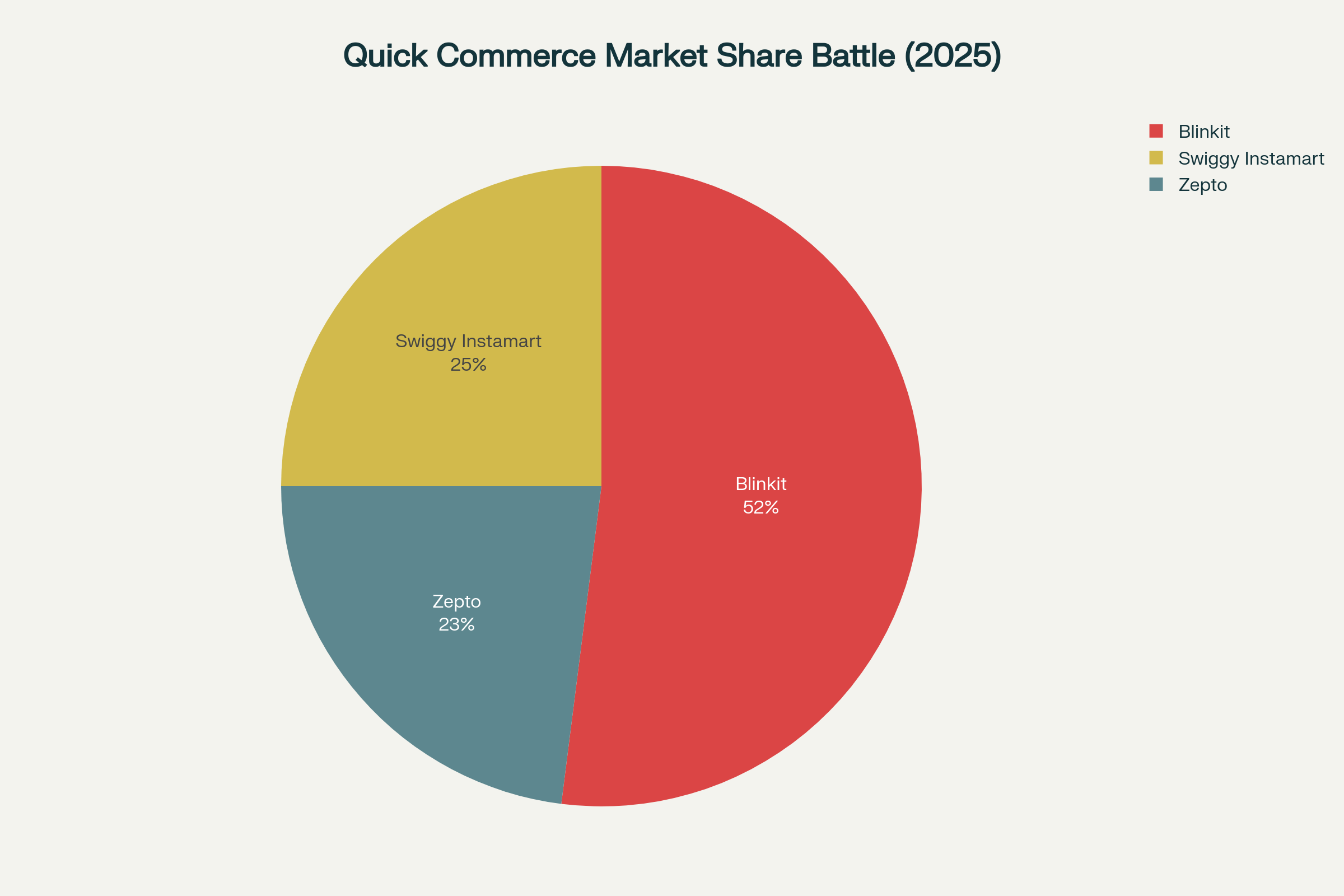
With plans to add “a few hundred” dark stores over the next twelve months and focus on volume expansion, Zepto is challenging the current market order, where Blinkit commands approximately 52 percent share, followed by Instamart at 25 percent, and Zepto at 23 percent.
The renewed competitive intensity will likely manifest in multiple ways. First, increased marketing expenditure and promotional discounts will become inevitable as platforms battle for customer acquisition and retention.
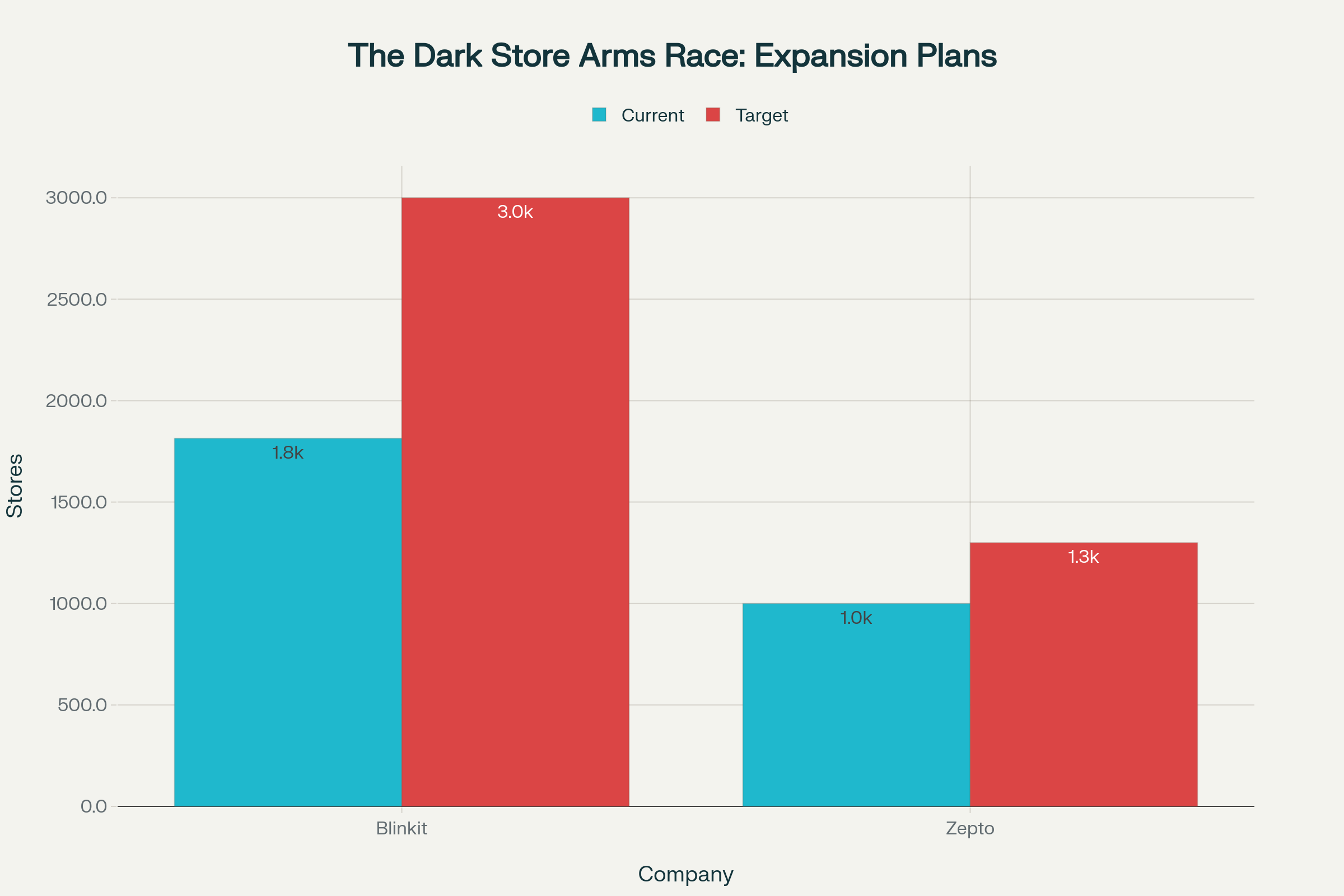
Second, the race to expand dark store networks will accelerate. Blinkit already operates over 1,814 dark stores with plans to reach 3,000 by March 2027, while Zepto currently has around 1,000. Third, the geographical expansion into Tier-II and Tier-III cities, which has been relatively measured, may intensify as players seek new growth frontiers beyond the saturated metros.
Zepto IPO Plans and Market Positioning
CEO Aadit Palicha has confirmed that the latest Zepto funding round serves as a pre-IPO move, strengthening financial stability before going public. These IPO plans underscore Zepto’s confidence in its profitability roadmap and signal growing investor interest in India’s quick commerce market.
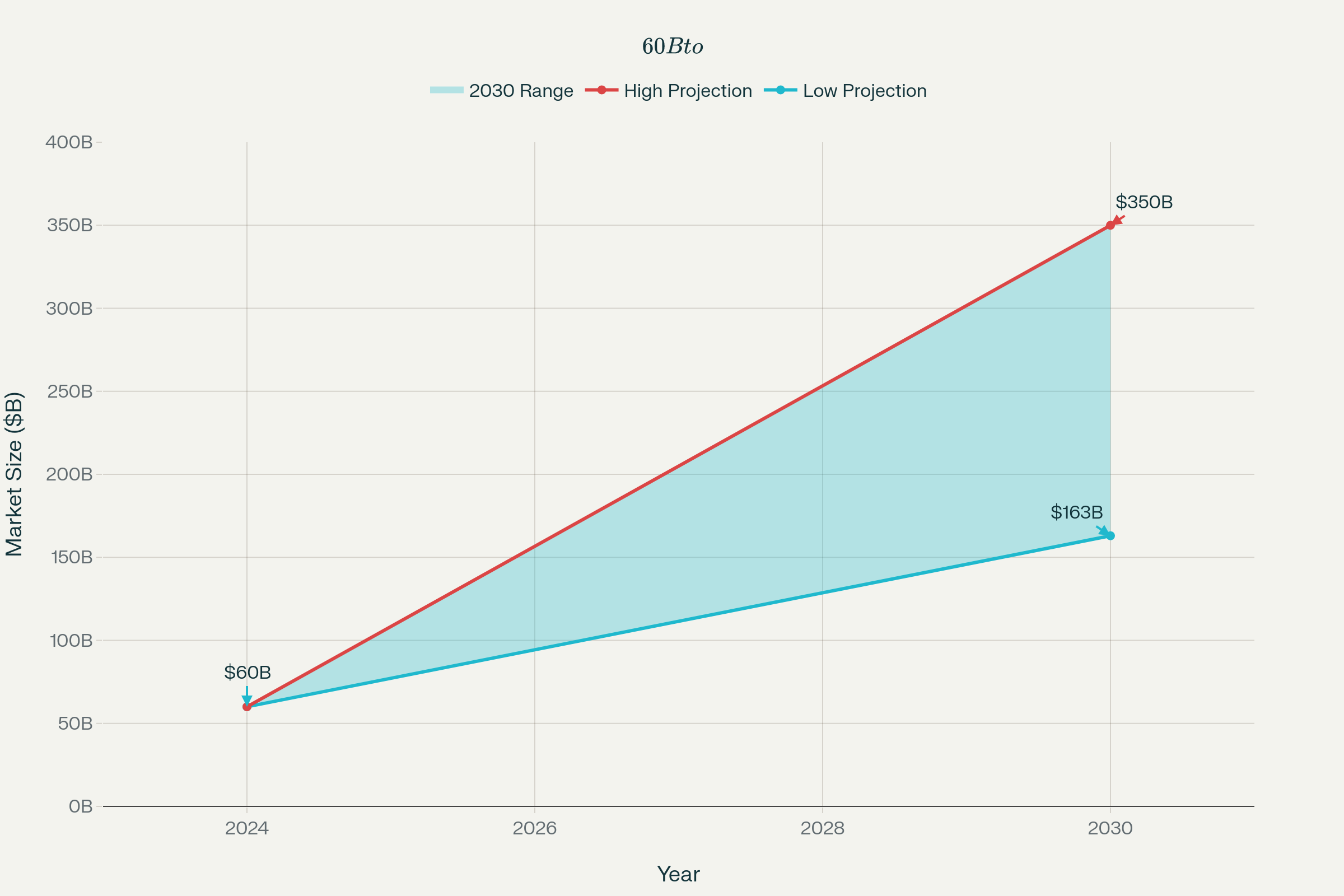
Zepto’s funding arrives at a transformative moment for Indian e-commerce. The sector, valued at approximately $60 billion with 270 million online shoppers in 2024, is projected to reach $163-350 billion by 2030, depending on various estimates.
Quick commerce, specifically, has emerged as the fastest-growing segment, expanding from INR 64,000 crore in FY25 to a projected INR 2 lakh crore by FY28—nearly tripling in just three years.
This explosive growth fundamentally alters consumer expectations and competitive dynamics. Traditional e-commerce platforms like Amazon and Flipkart, which built their empires on 1-7 day delivery windows, now face pressure to adopt hyperlocal fulfillment models.
The result is a convergence, as legacy players are launching quick commerce arms (Flipkart Minutes, Amazon Now), while quick commerce platforms are expanding product categories beyond groceries into electronics, fashion, beauty, and even pharmacy.
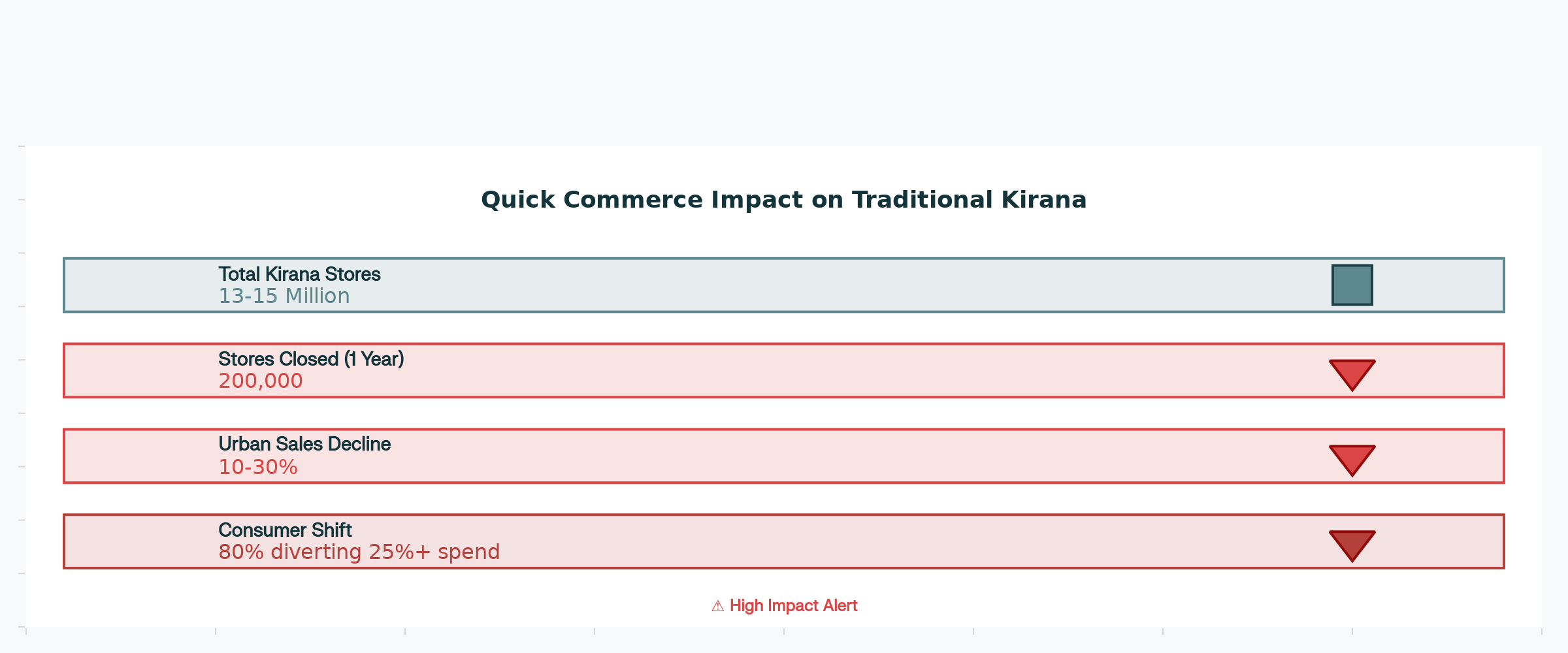
The impact on traditional retail is equally profound. India’s 13-15 million kirana stores, which control 85-87 percent of grocery sales, face unprecedented disruption. Approximately 200,000 kiranas have shut down in the past year, with urban stores reporting 10-30 percent sales declines as 80 percent of consumers divert at least 25 percent of grocery spending to quick commerce.
While kiranas remain crucial for FMCG distribution, especially in smaller cities and rural areas, the writing is on the wall for metropolitan neighborhood stores unless they adapt by partnering with platforms or digitizing operations.
The Profitability Paradox and Sustainable Growth
Perhaps the most consequential question raised by Zepto’s funding is whether quick commerce can achieve sustainable profitability at scale. Despite burning through approximately $2 billion in the past 18 months, Zepto claims to have turned “several hundred” stores profitable while maintaining hypergrowth.
Blinkit has similarly made progress, moving from -13 percent EBITDA margins in Q4 2022 to near break-even, with contribution profit turning positive. These improvements stem from multiple levers: increasing average order values, reducing supply chain costs, expanding into higher-margin categories, and monetizing through advertising.
However, Zepto’s fresh capital and expansion plans could disrupt this trajectory toward profitability industry-wide. As platforms compete more aggressively on pricing and customer acquisition, the temptation to sacrifice short-term margins for market share becomes overwhelming.
The quick commerce model faces inherent challenges: relatively low average order values (INR 400-700), modest product margins, and high costs for rapid fulfillment, logistics, and last-mile delivery. These structural headwinds explain why dozens of global quick commerce startups collapsed during the 2022-2023 funding winter.
Yet India presents unique advantages that may enable profitability where others have failed. The country’s unorganized retail structure, with 90 percent+ of the $650 billion grocery market fragmented among small kiranas, gives scaled platforms significant buying power and pricing advantages.
Lower labor costs allow companies to build comprehensive technology infrastructure in-house rather than relying on expensive third-party software. Dense urban populations create favorable unit economics for hyperlocal delivery models.
These factors, combined with strong product-market fit and operational excellence, suggest that market leaders may indeed achieve sustainable profitability—but only if they can resist the siren call of growth-at-any-cost.
India Retail Transformation Driven by Quick Commerce
The rise of Zepto and its peers represents a broader Indian retail transformation, where hyperlocal delivery, speed, and digital integration redefine the consumer experience. Traditional kirana stores face mounting pressure to digitize as the quick commerce market penetrates deeper into Tier-II and Tier-III cities.
As Zepto prepares for its 2026 IPO with a strengthened balance sheet, the broader implications for Indian e-commerce are coming into focus. The sector is entering a phase where speed, convenience, and experience matter as much as price and selection.
Quick commerce is no longer competing primarily with other online channels but directly with offline retail for wallet share in everyday categories. This shift is pushing traditional retailers, from mom-and-pop stores to organized chains, to digitize or risk obsolescence.
The government’s Open Network for Digital Commerce (ONDC) initiative, which has onboarded over 36,000 sellers across 236+ cities, offers an alternative path, one where neighborhood stores can participate in the digital economy without becoming casualties of platform capitalism.
Whether this model scales quickly enough to protect India’s retail ecosystem remains uncertain, but it represents a recognition that quick commerce’s rise creates winners and losers with significant economic and social consequences.
Ultimately, Zepto’s $450 million raise accelerates trends already in motion: the convergence of e-commerce and physical retail, the primacy of speed in consumer expectations, the evolution toward omnichannel strategies, and the increasing capital intensity required to compete at scale.
Stay ahead of the curve and follow IndiaTechDesk on Facebook, Twitter and Linkedin for in-depth news of market trends, funding updates, and regulatory changes affecting startups in India.
Read More:
- Temasek Continues Support for Electric Vehicle Maker OLA
- Byju’s Gets a Lesson in Accountability as Prosus Deliver Scathing Review
- Funding Winter Chills Indian Startups, Valuations Slide as Unicorns Dwindle
- In the Din of Surging IPO Clamor, Indian Startups Seeks Government Permission for Direct Overseas Listing
- Aksum, a Supply Chain as a Service Platform, Secured $1 million