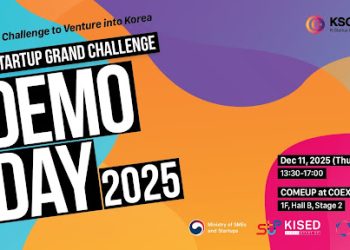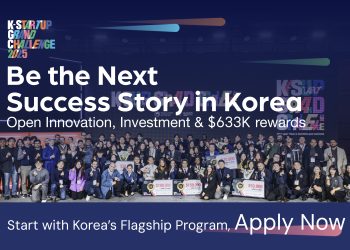


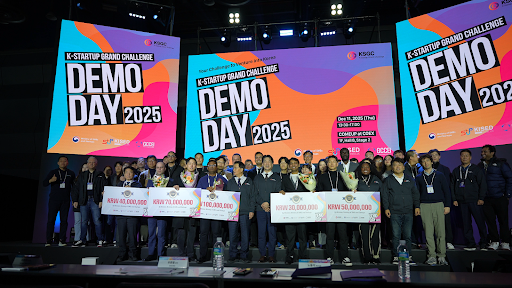
The K-Startup Grand Challenge (KSGC) 2025, Korea’s largest inbound startup competition for high-potential global founders, crowned Konnect as the grand-prize winner during its Demo Day held within COMEUP 2025, where global startups showcased cutting-edge solutions in the Korean startup ecosystem on December 11 at COEX Convention & Exhibition Center in Seoul.
Konnect, the Indian authentication platform, took home KRW 100 million (about $66,700) after competing against 2,626 applicants from 97 countries, marking a milestone for Korea’s largest inbound startup competition.
The 2025 edition shattered previous records, attracting nearly 30 percent more applications than prior years. This surge reflects Korea’s strategic positioning as a gateway to Asian markets, particularly as global startups seek alternatives to saturated Western ecosystems.
The program received 2,626 applications spanning 97 countries. However, the raw numbers tell only part of the story. The programme’s growing selectivity reveals deeper strategic shifts in how Korea evaluates and supports international founders.
- The multi-stage filtering process demonstrates this evolution clearly:
- 80 startups progressed to Phase 1 for remote participation
- 40 teams earned Phase 2 selection and received invitations to Korea
- 20 teams selected for Phase 3 of KSGC 2025
- 8 finalists secured spots on the Demo Day pitch stage
This rigorous winnowing process signals that KSGC has evolved beyond simply maximizing participant numbers or achieving broad geographic representation. The programme now prioritizes startups demonstrating tangible alignment with Korean market needs, proven capacity to adapt their business models for local conditions, and genuine preparedness to collaborate with Korean conglomerates and government institutions.
The selection criteria emphasize practical market entry potential rather than novelty alone. Consequently, successful applicants must demonstrate that they understand Korea’s unique business environment, can navigate its regulatory landscape, and offer solutions that address specific gaps in the Korean startup ecosystem.
The strategic recalibration ensures that global startups receiving support have realistic pathways to sustainable operations in Korea and broader Asian markets, rather than treating the programme as merely a funding opportunity or networking exercise.
Vice Minister Roh Yong-seok of the Ministry of SMEs and Startups emphasized Korea’s commitment during the event, stating the government will “spare no policy support” to help global startups succeed in Korea and energize the nation’s innovation ecosystem. Consequently, this approach distinguishes Korea from competitors like Singapore and Hong Kong, which often require equity stakes or impose stricter regulatory frameworks.
Winner Konnect Addresses Critical Market Gap
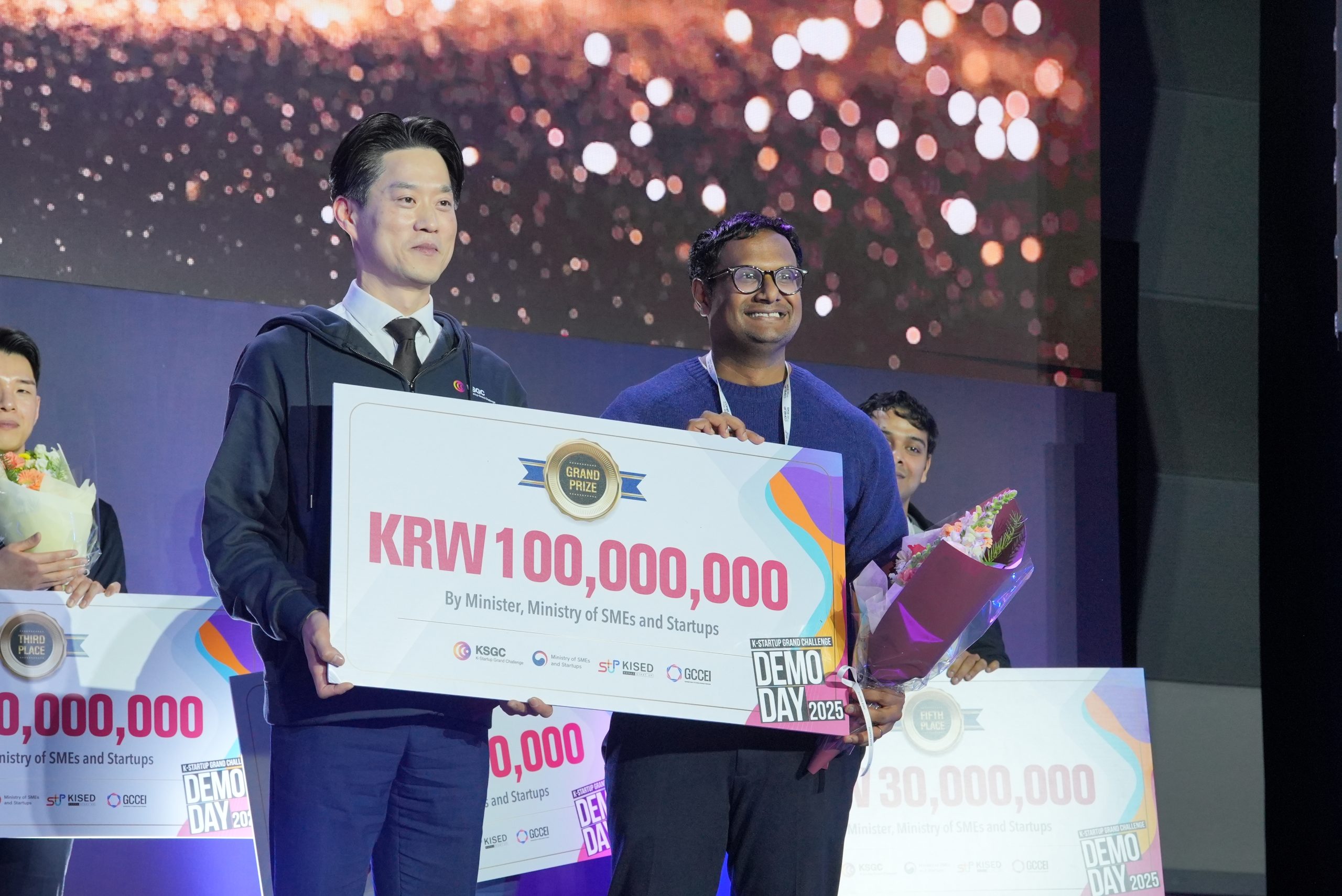
Konnect’s victory stems from solving a persistent problem: foreign residents and tourists in Korea struggle with identity verification and payment systems that favor locals. The platform integrates authentication, payments, settlements, and convenience services into a unified system, eliminating border-related barriers.
Furthermore, the Konnect team plans to expand beyond payments into a comprehensive lifestyle platform, potentially capturing a market of millions of foreign workers, students, and tourists who navigate Korea’s digital infrastructure daily.
The solution arrives at an opportune moment. Korea hosts approximately 2.5 million foreign residents, yet many financial and digital services remain inaccessible without local documentation. Therefore, Konnect’s approach could standardize access across sectors, from banking to e-commerce, creating a template for other markets with similar challenges.
Diverse Technologies Secure Top Honors
MaimHaim, a United States-based startup, claimed second place and received KRW 70 million ($46,700) with its unmanned operations technology. The startup combines IMU sensor fusion nodes with Zero UI interfaces and encrypted token-based systems, enabling machines to operate without traditional user interfaces. This technology particularly appeals to manufacturing and logistics sectors, where worker safety and efficiency drive adoption of autonomous systems.
Meanwhile, Pierrot Company from Canada secured third place and KRW 50 million ($33,300) for its IT asset circulation platform. The startup redeploys idle corporate devices across borders, addressing e-waste concerns while reducing technology costs for businesses. Additionally, this model positions Korea as a hub for the redistribution of global tech assets, potentially creating a new industry vertical.
What Korea’s Top 20 Startups Reveal About Innovation Priorities
The 20 startups selected for Phase 3 work across AI, healthcare technology, cybersecurity, robotics, climate solutions, and digital infrastructure. While these sectors seem different on the surface, they share one important trait: each company uses technology to solve practical, real-world problems.
Several healthcare startups like Acurion, Patientory, and BION focus on medical diagnostics and patient care. Korea chose these companies because the country needs AI-powered medical tools and solutions for its aging population. Other companies, including GROUNDUP.AI, Predulive Labs, and Peris.ai, work on industrial safety, compliance tracking, and cybersecurity. These areas directly support Korea’s strong manufacturing and infrastructure industries.
Robotics companies also made the cut. IDOLL Robotics builds robots for emotional connection, while MaimHaim creates systems for operational efficiency. Climate-focused startups like Protein Kapital and RIFFAI match Korea’s environmental goals and sustainability commitments.
Korea is not betting everything on one industry. Instead, the K-Startup Grand Challenge 2025 brings in companies that strengthen what Korea already does well, while also filling gaps where Korean startups are less active. This balanced approach helps Korea build a more complete innovation ecosystem.
The selected global startups bring specific expertise and technologies that Korean companies need, creating partnerships that benefit both sides. This strategy turns COMEUP 2025 and the broader Korean startup ecosystem into a practical bridge between international innovation and local market needs.
KSGC 2025 Phase 3 Startups (Top 20 Teams) (Announced at Demo Day) *Alphabetical Order
- 3TGDS: Travel Trust Tickets enabling instant redemption across global travel & lifestyle services
- Acurion: AI detecting genomic markers for precise, efficient cancer diagnosis
- ArbaLabs: Securing AI at the edge for aerospace & critical infrastructure with sovereign trusted tech
- AvoLabs: AI-driven B2B EdTech tools delivering personalized learning and automation
- BION: LEO™ Gluten Sensor helping manage gluten intolerance with simple food-allergy detection
- Digital Human Corporation: Human-centric AI with KAi, an empathetic digital companion for elderly support
- GROUNDUP.AI: AI asset management using sensors and agents to predict equipment failures early
- IDOLL Robotics: Emotionally intelligent robot that sees, feels, and grows with users
- InsightMatches: AI SaaS platform automating and accelerating global research and innovation matching
- Konnect: Super-app for foreigners integrating search, bookings, payments, and verification
- MaimHaim: AI geofencing that auto-activates location-based services at venues and facilities
- Markopolo AI: AI automation platform personalizing engagement via SMS, email, push, WhatsApp, and more
- Niio: Platform turning any screen into a digital art canvas streaming curated global art
- Patientory: Web3 health platform enabling secure management and sharing of personal medical data
- Peris.ai: AI orchestration platform detecting and responding to cyber threats in real time
- Pierrot Company: IT device subscription and IT recovery service
- Predulive Labs: AI infrastructure analytics detecting defects and compliance issues in real time
- Protein Kapital: Sustainable alternative protein & bio-fertilizer produced using insects and food waste
- RIFFAI: AI sensing technology monitoring environmental changes and pollution
- Smart Contract: Automated smart contract workflows simplifying document and identity processes
Strategic Timing Within COMEUP Amplifies Impact
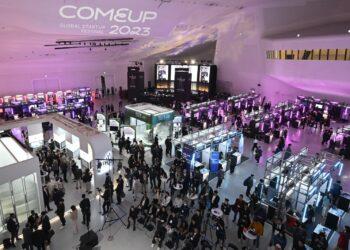
Hosting Demo Day within COMEUP 2025, Korea’s flagship startup festival held December 10-12 at COEX, provided participating global startups with unprecedented visibility. The festival attracted thousands of attendees, including venture capital investors, corporate executives, and international media, transforming each pitch into multiple collaboration opportunities.
Furthermore, all K-Startup Grand Challenge participants gained access to COMEUP’s conferences, exhibitions, and networking programs, amplifying their engagement with Korea’s innovation ecosystem beyond the competition itself.
COMEUP 2025, themed “Recode the Future,” featured 275 startups from 46 nations across AI, robotics, gaming, and green energy sectors. Consequently, KSGC finalists connected with potential partners operating in complementary industries, creating collaborations that extend beyond the demo day presentations.
Comprehensive Support Extends Beyond Prize Money
The 20 teams selected for Phase 3, including the eight Demo Day finalists, receive three months of intensive support valued far beyond the cash prizes. This package includes office space in Pangyo, often called Korea’s Silicon Valley, business matchmaking with major Korean conglomerates, and tailored investor relations opportunities.
Additionally, startups receive visa sponsorship, business registration assistance, and incorporation support, addressing practical barriers that often derail international market entry.
Total non-dilutive financial assistance across all phases reaches KRW 950 million (approximately $633,000), distributed among participants as travel grants, commercialization funding, and prize awards. Notably, this equity-free structure allows founders to retain full ownership while accessing Korea’s robust public and private innovation infrastructure.
Decade of Impact Reshapes Global Startup Landscape
Celebrating its 10th anniversary in 2025, the K-Startup Grand Challenge has supported more than 1,000 international startups since launching in 2016. The program, hosted by the Ministry of SMEs and Startups and organized by the Korea Institute of Startup & Entrepreneurship Development, operates through a multi-stage evaluation process designed to identify high-potential founders capable of scaling in Asian markets.
This year’s program followed a three-phase structure: the Exploration Phase ran remotely for 80 selected teams, focusing on market validation and mentoring; 40 teams advanced to the Entry Phase in Korea from September through December; and finally, the top eight teams pitched at Demo Day, where on-site evaluations determined final rankings. Consequently, this rigorous selection process ensures only the most viable ventures receive maximum support.
Korea’s geographic and economic position make it an ideal launchpad for startups targeting broader Asian markets. The country maintains strong trade relationships with China, Japan, and Southeast Asian nations, while its advanced digital infrastructure and tech-savvy consumer base provide ideal testing grounds for innovative solutions.
Moreover, Korean conglomerates actively seek external innovation through open innovation programs, creating acquisition and partnership opportunities unavailable in many other markets.
Paul Kwon, Global Business Team Lead at GCCEI, noted that receiving over 2,600 applications demonstrates the program’s evolution over a decade. “We remain committed to helping global founders scale their operations, form lasting partnerships, and make Korea their strategic base for long-term growth across Asia,” Kwon stated.
The K-Startup Grand Challenge continues strengthening Korea’s position as a critical node in the global startup ecosystem, offering international founders structured pathways to Asian market success while injecting fresh innovation into Korea’s domestic economy.
As demonstrated by Konnect’s authentication platform, MaimHaim’s Zero UI technology, and Pierrot Company’s asset circulation model, the program attracts diverse solutions addressing real market needs rather than speculative ventures, ensuring sustainable impact for both startups and the Korean startup ecosystem they enter.
Stay ahead of the curve and follow IndiaTechDesk on Facebook, Twitter and Linkedin for in-depth news of market trends, funding updates, and regulatory changes affecting startups in India.
Read More:
- South Korea’s Startup Residency & Acceleration Program K-Startup Grand Challenge 2021 accepting applications till June 15, 2021.
- Indian Startups can now Apply for South Korea’s K-Startup Grand Challenge 2022.
- K-Startup Grand Challenge 2023 from South Korea: The Most Remarkable Global Accelerator Program Invites Applications from Tech Startups.
- Don’t miss out on the opportunity to join the most prominent global startup acceleration program in South Korea: Apply Now for K-Startup Grand Challenge 2023 before May 18th.
- South Korea’s government aims to attract global startups with its residency and acceleration program.