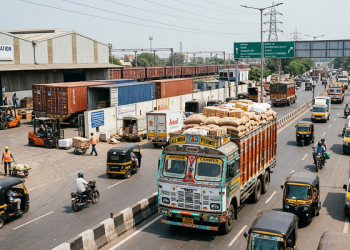



India’s logistics sector growth is set to reach $484 billion by 2030, driven by Tier-2 city startups, supply chain innovation, advanced warehousing solutions, and last-mile delivery technology that’s redefining the logistics market, and this revolution isn’t happening where you think.
Forget the Golden Quadrilateral. The next wave of supply chain disruption isn’t unfolding in Mumbai or Bengaluru. It’s taking root in Indore, Coimbatore, and Lucknow.
IndiatechDesk spoke with Mr. Kamal Kishore Kumawat, Co-Founder & CTO at Edgistify, Building India’s most trusted warehousing and fulfilment partner, enabling omnichannel growth for high-growth businesses across Beauty, Electronics, and FMCG.
Kumawat believes that the Golden Quadrilateral connects four cities. However, what’s happening now in India is about connecting 4,000 towns and redefining what “supply chain excellence” means in emerging markets.
He said, while global giants spent decades optimizing for metro markets, a silent transformation has emerged in India’s hinterland. The country’s logistics sector is projected to surge at an 8.8 percent CAGR through 2030, with more than half of this growth driven by startups born outside the top-tier cities.
The numbers reveal a striking shift as 51 percent of India’s startups now emerge from Tier-2 and Tier-3 cities, with logistics and supply chain ventures leading the charge. These aren’t copycat businesses replicating metro models. They’re building contextual solutions for India’s fragmented markets, hyperlocal warehousing networks, innovative last-mile delivery systems, and demand-responsive supply chains that multinational players never imagined.
This geographic redistribution signals more than expansion. It represents a fundamental re-architecture of how goods move across the world’s most populous nation. As consumption patterns evolve beyond metros and new economic hotspots emerge, India’s logistics backbone is becoming distributed, resilient, and radically more inclusive.
The New Geography of Demand: Beyond the Metros
To understand the engineering behind this shift, we must look at the data. India’s urban landscape is no longer a monopoly of the metros, says Kumawat. The purchasing power in cities like Indore, Coimbatore, and Guwahati has surged. Industry data confirms that over 60 percent of India’s e-commerce growth now originates from these regions, driven by deepened internet penetration and smartphone usage.
This rising demand has created an urgent “optimisation problem.” The legacy hub-and-spoke models, designed for high-density metro pin codes, fracture when faced with the dispersed populations of Tier-2 India.
As consumers outside metros demand the same speed and service quality as their counterparts in South Delhi, logistics sector networks must evolve to meet these expectations. We are moving from centralised, rigid logistics sector networks to adaptive, proximal networks that can scale rapidly with regional demand.
Infrastructure Shift: The Rise of Distributed Warehousing
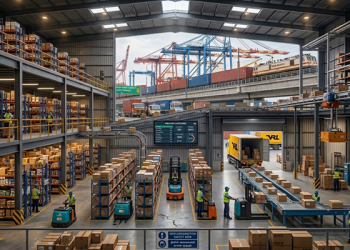
A critical component of this revolution is the physical asset layer. India’s warehousing landscape hit a significant milestone this year, with total organised warehousing stock reaching 533.1 million sq. ft.
Crucially, nearly 100 million sq. ft. (about 18.7 percent) of this now lies in emerging Tier-2 and Tier-3 cities. This is vital. In the traditional model, goods travelled hundreds of kilometres from a central hub to reach a rural customer, incurring high costs and time delays.
Today, we are seeing a distributed network architecture. By placing inventory in regional warehouses closer to the consumption node, we are enabling faster delivery and greater supply chain agility. This “inventory decentralisation” is the backbone of the modern e-commerce and consumer goods sectors in India, added Kumawat.
The Advantage of Vernacular Intelligence
Why are local startups winning? Because logistics sector in India is not just about algorithms; it is about context.
“Local founders possess what I call “vernacular intelligence.” They understand the pulse of their regions in ways a remote corporate entity cannot. They know the seasonal peaks (such as local harvest festivals), the specific transport bottlenecks in a district, and the unstructured behaviour patterns of local merchants,” Kamal Kishore Kumawat told IndiaTechDesk.
Because they operate in lower-cost regions, their unit economics are inherently stronger, making their models more sustainable. Furthermore, they bridge the “trust gap” faster. Their ability to navigate local ecosystems and collaborate with regional stakeholders allows them to build hyper-relevant operational models. In markets where “one-size-fits-all” fails, these startups are succeeding by building for the specific constraints and opportunities of their geography.
The Tech Stack of Bharat: Engineering the Change
The most exciting part of this revolution is the technology underpinning it. We are seeing a transition from reactive, manual operations to proactive, digital-first execution.
- Digital Logistics & Visibility: For decades, regional supply chains suffered from “data blindness”, wasteful movement, stock-outs, and guessing-based forecasting. Today, startups are deploying cloud-based Warehouse Management Systems (WMS) and real-time dashboards even in small towns. These tools allow businesses to track inventory health and learn demand patterns, minimising inefficiencies. We are finally digitising the “dark spots” of the supply chain.
- On-Demand Warehousing: (The “Cloud” of Logistics) At Edgistify, we support the shift toward flexible, on-demand warehousing. Businesses can now scale storage space up or down on a seasonal or contractual basis, akin to cloud computing. This is a game-changer for Tier-2 markets with volatile demand. It allows brands to enter new cities like Lucknow or Bhubaneswar without massive Capex, respond quickly to demand spikes, and reduce the burden on centralised hubs.
- Fleet Optimisation & Intelligent Routing: Efficient fleet movement is non-negotiable in areas where infrastructure is unpredictable. Startups are applying route optimisation algorithms to minimise “empty miles”, a significant source of cost and carbon emissions. Automated dispatching and intelligent routing ensure that service-level agreements (SLAs) are met even in regions with complex geography.
- Automation & The Asset-Light Model: The core of this ecosystem is a potent combination of automation and operational excellence. Many startups are employing asset-light models backed by digital accuracy, automating sorting and tracking with scanners, and integrating Transport Management Systems (TMS) with WMS. This breaks down the silos between B2B and B2C operations, creating a unified, agile supply chain.
Dark Stores and the Hyperlocal Economy
“The innovation isn’t just in moving goods; it’s in storing them. The proliferation of Dark Stores and regional fulfilment centres in smaller cities is redistributing economic opportunity,” said Kamal Kishore Kumawat while addressing India’s newfound love for dark stores.
Each new node in this network creates jobs in operations, technology, and transport. More importantly, it democratizes access for MSMEs. Small manufacturers who could previously only sell locally can now plug into these efficient supply chains to reach national customers. This is the realisation of a digitally enabled, economically inclusive future, where growth is distributed across the nation rather than concentrated in a few urban clusters.
Challenges: The Engineering Hurdles Ahead
Despite the optimism, we must be realistic about the friction points.
- Infrastructure Gaps: While improving, road infrastructure and utilities in emerging cities can still be inconsistent, hindering true scalability.
- Capital & Talent: Founders outside metros often struggle to attract institutional capital or specialised tech talent required to build automation-heavy stacks.
- Regulatory Fragmentation: Logistics compliance often varies by state, creating friction for regional players expanding their footprint.
However, solutions are emerging. The Unified Logistics Interface Platform (ULIP) is standardising data exchange, while the Open Network for Digital Commerce (ONDC) is democratizing market access of the Indian logistics sector. Solving these challenges will require a collaborative approach to standardised policies and “green” investments.
Sustainability and the Human Element
As we expand, sustainability cannot be an afterthought. Green warehousing, EV-based last-mile delivery, and responsible waste management are essential to align this growth with India’s environmental commitments, added Kumawat.
But beyond the environment, there is the social dimension. This shift matters because it touches lives. For the consumer, it narrows the urban-rural gap in access to goods. For the economy, a nationwide grid of distributed logistics establishes systemic resilience, reducing reliance on a few choked urban centres.
Most importantly, it elevates the dignity of labour. By bringing organised, tech-enabled jobs to Tier-2 cities, we are alleviating migration pressure on megacities and boosting regional economies.
The Road Ahead
Addressing the future, Kamal Kishore Kumawat said, “To achieve the full potential of this revolution, we need a ‘triple helix’ of cooperation between government, corporates, and startups. Investments must flow into multimodal connectivity and regional logistics parks. Government-backed credit schemes can fuel local founders, while skill-development programs must align with modern supply chain roles.”
India’s economic rise will depend not only on how much the country produces, but also on how reliably, efficiently, and predictably it can move what it produces. The startups of Bharat are building the engine for this movement. They are proving that the next unicorn won’t just come from a tech park in Bengaluru, but perhaps from a warehouse in Jaipur, solving real problems for real people.
Stay ahead of the curve and follow IndiaTechDesk on Facebook, Twitter and Linkedin for in-depth news of market trends, funding updates, and regulatory changes affecting startups in India.
Read More:
- Top Five Women Led Unicorn Startups of India Changing the Business Landscape
- Indian startups can apply for the ‘Digital India AatmaNirbhar Bharat Innovate Challenge’ till 18th July 2020
- AI Security Startup P0 Secures $6.5 Million in Seed Funding Led by Lightspeed Venture Partners
- Raptee Raises $3 Million in Pre-Series A Funding to Speed up EV Manufacturing
- From Boom to Bust, Understanding the Current State of Indian Unicorns and What Lies Ahead