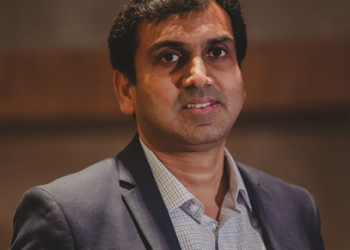



AI in fintech, regulatory automation, compliance tech, the digital rupee, MSME fintech solutions, and embedded finance are no longer just buzzwords; they’re the building blocks of India’s rapidly evolving financial ecosystem. Few entrepreneurs understand this transformation as deeply as Anil K. Sharma, Director and Founder of AKSSAI ProjExel.
A Chartered Accountant (Class of 2008), Anil K. Sharma spent years immersed in audit, finance, and consulting roles with Big 4 firms and global corporations before identifying a critical gap in how MSMEs navigated regulatory complexity.
What pushed Anil K. Sharma to act?
A firsthand view of inefficiencies in business operations and the urgent need for compliance tech and regulatory automation. In response, Sharma launched AKSSAI ProjExel in 2017 and later developed FINAC, an AI in a fintech platform that merges accounting, payroll, legal, and regulatory functions. The result was a scalable, digital-first infrastructure for MSME fintech solutions in India.
Talking about FINAC, Sharma said, “The impact of FINAC is twofold.” First, it automates complex compliance workflows, reducing dependence on manual processes. Second, it supports the integration of embedded finance, enabling small businesses to offer financial services, such as loans or insurance, natively within their operations. This kind of compliance tech not only increases efficiency but also democratizes access to fintech benefits.
“In today’s economic landscape, AI in fintech is more than just a trend, it’s a paradigm shift,” Sharma says in this exclusive interview with IndiaTechDesk. “We built FINAC because businesses, especially MSMEs, lacked access to real-time, tech-enabled tools that deliver regulatory automation with transparency, accuracy, and speed.”
How is AI transforming the Indian fintech landscape, and where do you see India heading in terms of regulatory automation and compliance tech in the next 3–5 years?
Almost all players in fintech have understood the power of AI and have already adopted it in their daily research & development, as well as the rollout of new features. Regulatory automation and compliance are expected to undergo drastic changes due to the impact of AI in a few years.
It has already started happening, and we will see great products in the next few quarters that solve problems in this area, which were previously expected to take a very long time and require a lot of investment. However, with AI, it is becoming faster and cheaper to build. Common business owners will soon start to reap the benefits of AI in ensuring compliance with current and future regulations, as well as with pre-AI era fintech products.
FINAC claims to reduce financial processing time by up to 90%. Could you walk us through how the AI logic works behind such automation and quality control?
Our team has seen significant improvements in terms of speed throughout our development life cycle. AI provides a multitude of options/ideas quickly when considering a feature or a completely new module. Individually,
AI is a great tool, but it must be supplemented with good thinking and directives that consider what users want from the product. We have added numerous layers to our system for quality control.
The system gives alerts to the right user, handles escalations effectively to highlight the issues to the right person in the team for faster resolution. An early warning system in the software helps people take timely action before filing any returns or forms. Earlier, what would have taken a lot of people to accomplish, we can now do with a smaller team quite effectively & efficiently.
With UPI becoming a global benchmark for instant digital payments, how do you see Indian fintechs capitalizing on cross-border payments and real-time settlement infrastructure?
I’m sure very soon we will see how fintechs are coming up with efficient and cost-effective solutions for cross-border payments built based on UPI. A significant amount of work is already in an advanced stage among many fintechs.
The regulators and government institutions, including IFSCA/GIFT City/NPCI, are all providing robust support, making it very easy to discuss any ideas, utilize the sandbox, and obtain answers to any questions a fintech may have. The government is also giving support to fintechs. UPI is rapidly expanding into multiple countries itself. Still, fintech will also develop solutions for use cases that cannot be served directly by UPI.
As the RBI pushes forward with its Digital Rupee pilot, what role do you foresee for AI-powered platforms in supporting CBDC-related accounting, reconciliation, and auditing?
Due to programmability feature in Digital Rupee, gradually it will find its own place in the ecosystem. It will still take, I believe, at least 2-3 years for us to see it being used widely in commercial use cases. AI can advance the timeline by fastening up R&D to come up with solutions using Digital Rupee.
The AI-powered platforms supporting Digital Rupee can help in better real-time accounting, real-time reconciliations, ensuring the money is used for the intended purpose only. Auditing will be required only for exceptions, high-risk flagged transactions.
A lot of big data analysis we will see is used to really pinpoint potentially problematic transactions. All this will benefit government institutions too, as it will result in huge cost savings for them with very minimal investments to build such systems.
FINAC dedicates 50% of its architecture to governance and team performance. How does this structure support scalability while maintaining service quality across more than 13 cities?
This infrastructure allows Finac’s team to provide consistent service to every customer, effective centralized monitoring, and faster action on any identified issues. FINAC is ready to serve lakhs of customers in more than a hundred cities and is growing and expanding day by day.
End of day, everybody is looking for streamlined solutions to ever-evolving problems in the compliance/regulatory landscape, and with the consistency we offer, it is only a matter of time before these scales even further and faster.
India’s MSMEs face persistent challenges in accessing credit. How can fintech innovation, especially AI and embedded finance, empower this segment to become financially resilient?
This problem is well acknowledged by government institutions, and all fintech are constantly doing R&D to solve this problem. AI is helpful to solve this problem. For e.g., many fintech are working currently to build some sort of pattern recognition based on payments data, electricity consumption, and other available data points to synthesize and come up with a good usable indicator of how much credit can be given to a business owner.
AI enables faster R&D and thinking of new solutions, which without AI would have been very expensive to build. Fintech have just started using AI effectively 3-6 months back using AI effectively, and very soon we will see its impact on new solutions.
How does FINAC simplify tax and payroll compliance for non-accounting professionals, and what feedback have you received from MSMEs using the platform?
FINAC has a simple interface to see reports, transactions, analysis, and graphs about how your business is doing. A lot of business owners are checking their business data and using insights to improve margins, cut down costs, which they were not able to do because of dependency on an accounting staff to sit with them and explain to them, because the software was not user-friendly from a business owner’s point of view.
FINAC starts with no data entry; you just upload your invoice documents and bank statements, and it does the bulk of heavy lifting to complete your reports and tax returns.
The easy accessibility of FINAC’s team in various cities, visiting premises of the client to still help them with occasional queries they may have, no dependency on any particular staff, because FINAC stores all SOPs (standard operating procedures) of that business, all documents in File Manager, all attachments in accounting entries, all compliances monitoring with attachments in Compliance Calander, and other features, gives a good 360 percent support to a business owner. Hardly do they have to ask for any information.
Mostly everything is readily available in FINAC. Feedback in all cities is very positive. Even FINAC’s presence in 7 countries gives them assurance that whatever businesses or transactions they are doing or in the future may be doing cross-border, they will not have to change the software or the team. FINAC provides everything in one place, which is a very big permanent relief for them.
With increasing focus on RegTech and data privacy, how are Indian fintechs navigating the compliance maze while keeping pace with innovation and user experience?
The compliances have to be done, and there is no choice. Though it has increased compliance cost, with AI power solutions, it is very likely that compliance costs will come down in the near future or at least in the medium term. No doubt the pace of innovation has gone up significantly. Similarly, the customer expectations are also rising rapidly.
It provides both an opportunity and a threat. We will see fintech who will benefit from this as their teams are aggressively working on tapping into this opportunity. Overall, the customer experience will continue to become better and better. AI is a super over, a big game changer; it is levelling the playing field in many ways. Those fintech that will use it effectively will grow very, very fast.
Stay ahead of the curve and follow IndiaTechDesk on Facebook, Twitter and Linkedin for in-depth news of market trends, funding updates, and regulatory changes affecting startups in India.
Read More:
- Temasek Continues Support for Electric Vehicle Maker OLA
- Innovaccer Raises $275M in Series F to Transform Healthcare AI and Expand Global Impact
- 10 Emerging Startup Trends Redefining India’s Tech Ecosystem
- Y-Combinator backed SaveIN Secures $8 million Over Nine Months
- THB Secures $20 million in Funding to Fuel its Global Expansion