
IndiaTechDesk - India's Leading Tech and Startup Media Publication
  • Home
  • About Us
  • TOPICS
    • AI & Big Data
    • AR & VR
    • Blockchain
    • Business
    • Clean Technology
    • Content & Games
    • Cybersecurity
    • Ecosystem & Lists
    • Enterprise & SaaS
    • FinTech
    • Gadgets & Electronics
    • Health & Bio
    • Investments
    • IoT
    • Marketplaces & E-commerce
    • Robotics
    • Transportation & Logistics
    • enterprise
    • SaaS
  • Venture capital
  • Events
  • Contact Us
No Result
View All Result
  • Home
  • About Us
  • TOPICS
    • AI & Big Data
    • AR & VR
    • Blockchain
    • Business
    • Clean Technology
    • Content & Games
    • Cybersecurity
    • Ecosystem & Lists
    • Enterprise & SaaS
    • FinTech
    • Gadgets & Electronics
    • Health & Bio
    • Investments
    • IoT
    • Marketplaces & E-commerce
    • Robotics
    • Transportation & Logistics
    • enterprise
    • SaaS
  • Venture capital
  • Events
  • Contact Us
No Result
View All Result
IndiaTechDesk - India's Leading Tech and Startup Media Publication
No Result
View All Result
Home Indian Startups

India Removes 3-Year Wait for Deep-Tech Startups to Get Govt Funds

"New policy lets robotics, biotech and semiconductor startups access loans up to INR 1 crore immediately, solving the 'valley of death' funding gap that kills promising technologies

Kyung-soo by Kyung-soo
January 6, 2026
in Indian Startups
60 2
0
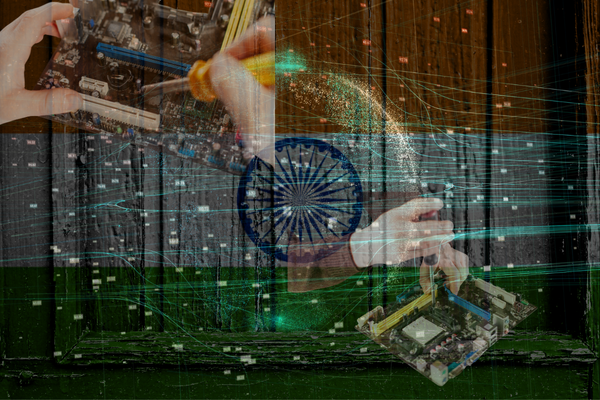
Deep-tech startups in India startup ecosystem gain DSIR recognition without three-year requirement, accessing government funding via technology readiness assessment.
202
SHARES
1.6k
VIEWS
Share on FacebookShare on Twitter

India has eliminated a mandatory three-year requirement for deep-tech startups seeking DSIR recognition under a policy reform announced on January 4 that promises to reshape the Indian startup ecosystem by unlocking government funding and technology-readiness assessment pathways for ventures still in their infancy.

Union Science and Technology Minister Jitendra Singh revealed the policy shift during the Department of Scientific and Industrial Research’s (DSIR) 42nd Foundation Day celebration, dismantling a temporal barrier that previously blocked early-stage robotics, semiconductor, biotech and quantum computing ventures from accessing institutional capital, tax incentives and market credibility stamps.

The change carries immediate financial consequences. Deep-tech startups can now access loans up to INR 1 crore ($120,000) from the Council of Scientific & Industrial Research without proving three years of operational history, a fundamental restructuring that addresses what venture capitalists call the “valley of death,” the funding gap between laboratory validation and commercial viability where promising technologies typically die.

Why the Old Rule Strangled Innovation

The three-year requirement emerged from conventional startup evaluation frameworks designed for software companies that scale rapidly on minimal capital. However, deep-tech startups building physical products, whether satellite components, advanced materials or medical devices, face radically different timelines and economics.

“Previously, founders proving technical feasibility in university labs faced a brutal paradox,” said a semiconductor startup founder who requested anonymity pending DSIR application.

“We needed capital to scale research, but could only access government funding after proving we no longer desperately needed it. That three-year gate forced many breakthrough projects to either seek foreign funding or abandon commercialization entirely.”

The mathematics proved this founder’s frustration. India’s deep-tech startups raised $1.55 billion across 264 deals in 2025. Still, fewer than 30 Indian deep-tech companies have ever raised more than $10 million, according to industry data analyzed by multiple venture capital firms.

Moreover, early-stage funding accounted for $850 million, 55 percent of total capital, signaling that the Indian startup ecosystem bottleneck lies precisely at the transition from laboratory demonstration to market prototype.

Consequently, the DSIR recognition reform targets this exact inflection point.

The Mechanics of Change

The policy substitutes a temporal criterion with a technical one. Instead of demonstrating three years of financial statements, deep-tech startups must now demonstrate technology maturity through the recently launched National Technology Readiness Assessment Framework, a standardized nine-level evaluation system that measures progress from basic research (TRL 1) to commercial deployment (TRL 9).

This shift carries cascading benefits beyond direct CSIR financing. DSIR recognition unlocks weighted tax deductions of 125-150 percent on R&D expenditures, customs duty exemptions on imported laboratory equipment, and accelerated depreciation allowances, thereby effectively reducing capital requirements by 15-25 percent for pre-revenue ventures, according to policy analysts.

Furthermore, DSIR recognition functions as a credibility signal in markets where technology complexity creates information asymmetries. Corporate procurement departments increasingly require vendor certification; deep-tech startups with government backing attract partnerships that would otherwise demand years of operational track record.

“The signaling effect matters as much as the money,” noted a venture capital partner at an Indian deep-tech fund. “When banks see DSIR recognition, they interpret that as third-party validation of technology merit, which reduces perceived lending risk dramatically.”

The Ecosystem Context: Why Now?

The timing reflects both ecosystem maturation and competitive urgency. India launched an INR 1 lakh crore ($12 billion) Research, Development and Innovation Fund in July 2025, explicitly designed for ventures at Technology Readiness Level 4 and above, technologies proven in laboratory environments but requiring capital to reach commercial scale.

However, the RDI Fund’s structure created an unintended gap. Startups graduating from university labs often lacked the three-year operational history required for DSIR recognition, which meant they couldn’t access the credibility and fiscal incentives needed to attract RDI Fund evaluation. The three-year requirement effectively delayed access to the entire government funding cascade by years.

Meanwhile, competitive pressures intensified. China invested $1.6 billion in deep tech in 2024, with sustained state backing providing patient capital across multi-year development cycles. Indian policymakers recognized that imposing arbitrary temporal gates.

At the same time, regional competitors provided structured early-stage support, threatening India’s position in the global deep-tech hierarchy, where it currently ranks sixth worldwide.

Additionally, sectoral dynamics demanded intervention. India’s semiconductor startups saw early-stage funding jump from $5 million in 2023 to $44 million by mid-2025. Still, this growth was concentrated in fabless chip design, an area that requires less capital than manufacturing or materials.

The three-year requirement particularly disadvantaged capital-intensive segments, where proving financial sustainability within that timeframe is physically impossible due to product development timelines.

Who Benefits Most

The reform disproportionately helps three constituencies. First, hardware and physical technology startups in robotics, space tech, advanced manufacturing and quantum computing, sectors where proving commercial viability within three years contradicts the fundamental physics of product development cycles.

Second, biotech and pharmaceutical innovators face regulatory validation timelines spanning 5-10 years for therapeutics, making three-year profitability requirements economically absurd. These ventures can now formalize corporate structures and access government funding immediately upon demonstrating technology readiness rather than waiting years.

Third, women-led ventures and first-time founders from lower-income backgrounds benefit because the fiscal incentives unlocked by DSIR recognition reduce total capital required for R&D infrastructure. The government specifically highlighted that over 10,000 women currently access DSIR schemes across 55 women-led self-help groups; removing temporal gates may accelerate this participation.

Stay ahead of the curve and follow IndiaTechDesk on Facebook, Twitter and Linkedin for in-depth news of market trends, funding updates, and regulatory changes affecting startups in India.

Read More:

  • How this Shopify Accelerator Startup is Assisting New Consumer Brands to Become Top Favorites During the Pandemic?
  • Centricity Secures $20 Million in Seed Round Led by Lightspeed, Boosting Valuation to $125 Million
  • Infra.Market Secures $120 Million in Pre-IPO Funding, Eyes $2.8 Billion Valuation
  • The $3B AI Giant You’ve Never Heard Of Is About to Go Public
  • Indian Startup Ecosystem Thrives with Record IPOs and Surging Venture Investments

Tags: Deep Tech startupDeeptechDSIRGovernment RegulationIndian Governmentindian startupIndian startup ecosystemStartup Fundingstartups in India
Kyung-soo

Kyung-soo

Kyung-soo is a seasoned journalist with more than eight years of experience. He is an industry expert with a deep understanding of the Southeast Asian startup ecosystem. With a passion for entrepreneurship and a keen eye for emerging trends, Soo has established himself as a go-to authority on all things related to startups in Asia. He contributes as a writer for IndiaTechDesk, drawing on his extensive knowledge and experience. Kyung-soo delves into the intricacies of the Indian startup landscape, uncovering hidden gems and shedding light on the latest developments. Through his insightful articles and thought-provoking analysis, he offers a comprehensive perspective on the ever-evolving world of startups in India.

Related Posts

Robotics startup Bengal Banergy startup advances underwater robotics India through deep-tech manufacturing, Ganga River robotics, family startup deep-tech.
Indian Startups

How this Indian Startup is Reimagining Deep-Tech by Shaping the Country’s Future of Robotics

June 1, 2026
Kovon's global talent mobility overseas hiring platform connects India's blue-collar workers to a cross-border workforce, making India overseas jobs accessible through its trusted workforce mobility startup.
Indian Startups

How this Startup Plans to Connect 1.5 Million Indian Workers to Global Jobs, Without a Single Middleman

May 2, 2026
Early-stage founders in incubation centres in India rely on startup support infrastructure and the startup incubation ecosystem for building a company.
Indian Startups

India’s Startup Incubation Model Needs a Leadership Reset

March 28, 2026
India's startup ecosystem crumbles under AI disruption — funding collapse accelerates SaaS obsolescence, BPO decline, and the EdTech crisis across sectors.
Indian Startups

Five Sectors that Built India’s Startup Decade are Now Fighting to Exist

February 28, 2026
India's AI chip startups advancing semiconductor design using RISC-V architecture, edge AI processing, DLI scheme funding, and homegrown chips for global markets.
Indian Startups

India’s AI Chip Startups Are Quietly Rewriting the Rules of the Global Semiconductor Race

February 26, 2026
Chart showing India startup profitability gap: PolicyBazaar's business model and unit economics outperform consumer brands' IPO performance post-2021.
Indian Startups

India’s IPO Profit Divide, Hard Lessons for Startups

February 24, 2026
No Result
View All Result

Recent Posts

Robotics startup Bengal Banergy startup advances underwater robotics India through deep-tech manufacturing, Ganga River robotics, family startup deep-tech.

How this Indian Startup is Reimagining Deep-Tech by Shaping the Country’s Future of Robotics

June 1, 2026
Skydo cross-border payments at GIFT City licence under RBI PA-CB framework for Indian fintech MSME exporters.

Skydo Bet on GIFT City Highlights India’s Quiet Challenge to Global Payment Giants

May 26, 2026
AI creator economy India: Short Flixx short video platform brings AI-generated content, creator monetization, and tier-2 creator opportunities.

In India’s Crowded Creator Market, Short Flixx is Backing AI and Tier- 2 Talent

May 12, 2026
Kovon's global talent mobility overseas hiring platform connects India's blue-collar workers to a cross-border workforce, making India overseas jobs accessible through its trusted workforce mobility startup.

How this Startup Plans to Connect 1.5 Million Indian Workers to Global Jobs, Without a Single Middleman

May 2, 2026
India supply chain AI dashboard showing tacit knowledge, logistics automation, warehouse robots, human judgment, and supply chain startups in action.

India’s Supply Chain Startups Must Learn to Capture Human Judgment

April 11, 2026
Srikanth K, Founder of AIXE Labs and Artograph AI, on building human-centered AI for memory and mental health.

“Memory Is Where Dignity Lives”, AIXE LABS Founder on Building Human-Centered Mental Health Technology

April 1, 2026
Enalytix AI video analytics dashboard converting CCTV surveillance footage into retail intelligence and employee productivity insights using computer vision.

AI Video Analytics Startup Enalytix is Teaching Cameras to Think

March 31, 2026


ABOUT US

IndiaTechDesk is obsessed with the Indian startup ecosystem, offering intelligent, engaging coverage of the innovations, emerging startups, and entrepreneurship in India.....read more

Follow Us

  • twitter

More from our network

India Tech Desk Korea Tech Desk US Tech Times Korea Travel Post Kpop Post Korea Product Post Korea Game Desk Asia Tech Daily Korea Tech Today
Categories
  • Accelerator
  • Agriculture
  • AI & Big Data
  • AR & VR
  • Bitcoin
  • Blockchain
  • Business
  • Clean Technology
  • Competitions
  • Content & Games
  • Coronavirus
  • Cryptocurrency
  • Cybersecurity
  • E-commerce
  • Ecosystem & Lists
  • Education
  • Electric Mobility
  • enterprise
  • Enterprise & SaaS
  • entertainment
  • Events
  • featured
  • FinTech
  • Gadgets & Electronics
  • Gaming
  • Guide
  • Health & Bio
  • Incubator
  • Indian Startups
  • Indian Women
  • Insurance
  • Interviews
  • Investments
  • IoT
  • Manufacturing
  • Market
  • Marketplaces & E-commerce
  • Regulation
  • Robotics
  • SaaS
  • Space Startup
  • Transportation & Logistics
  • Travel
  • Uncategorized
  • Venture capital
  • “Contact: [email protected]”
  • Terms of Use
  • Privacy Policy
  • Cookie Policy
  • About Us

Copyright © 2024 indiatechdesk.com

No Result
View All Result
  • Home
  • About Us
  • TOPICS
    • AI & Big Data
    • AR & VR
    • Blockchain
    • Business
    • Clean Technology
    • Content & Games
    • Cybersecurity
    • Ecosystem & Lists
    • Enterprise & SaaS
    • FinTech
    • Gadgets & Electronics
    • Health & Bio
    • Investments
    • IoT
    • Marketplaces & E-commerce
    • Robotics
    • Transportation & Logistics
    • enterprise
    • SaaS
  • Venture capital
  • Events
  • Contact Us

Copyright © 2024 indiatechdesk.com

Welcome Back!

Login to your account below

Forgotten Password?

Retrieve your password

Please enter your username or email address to reset your password.

Log In