



Vernacular streaming platform Kuku FM (Mebigo Labs Pvt. Ltd) has raised $85 million in funding, providing a major push to lead India’s digital storytelling wave, and fuel Indian micro drama content, expand audio storytelling, scale vernacular short video experiences, and increase creator payouts in India to capture the next billion mobile viewers.
The fresh funding round was led by Granite Asia (formerly GGV Capital), involving a mix of primary capital and secondary shares, which also saw some early investors partially exit.
The financing confirmed by the founder, Lal Chand Bisu, after the investment, put the valuation at roughly $550 million. Business press reports suggest this valuation could be even higher, depending on how primary and secondary components are counted.
That capital injection arrives at a pivotal moment for Indian digital media. In 2024, digital media became the single largest slice of the country’s media and entertainment pie, contributing roughly ₹802 billion (about $9.1 billion) and accounting for 32 percent of sector revenues.
The sector is still forecast to grow in the high single digits to low double digits over the coming years. For founders, investors and incumbents, that’s an open invitation to scale fast, capture language-first markets and lock in paying users.
What Kuku says it has built — and why investors deployed fresh capital
Kuku began life as Kuku FM (audio-first audiobooks and shows) in 2018 and has since broadened into a two-pronged product stack, namely, Kuku FM (audio) and Kuku TV (vertical, bite-sized video and serialised stories).
The company now claims more than 10 million paid subscribers, with a heavy skew towards non-metro India. Usage numbers suggest deep engagement, about 100 minutes a day per user on average, and more than 90 percent month-on-month activity among paying subscribers, according to the company and reporting based on Appfigures data.
Kuku also claims that it pays roughly INR 400 million (~$4.5m) per month to creators and hosts a creator base of ~10,000. Those creator economics and high engagement metrics are likely what drew the new round.
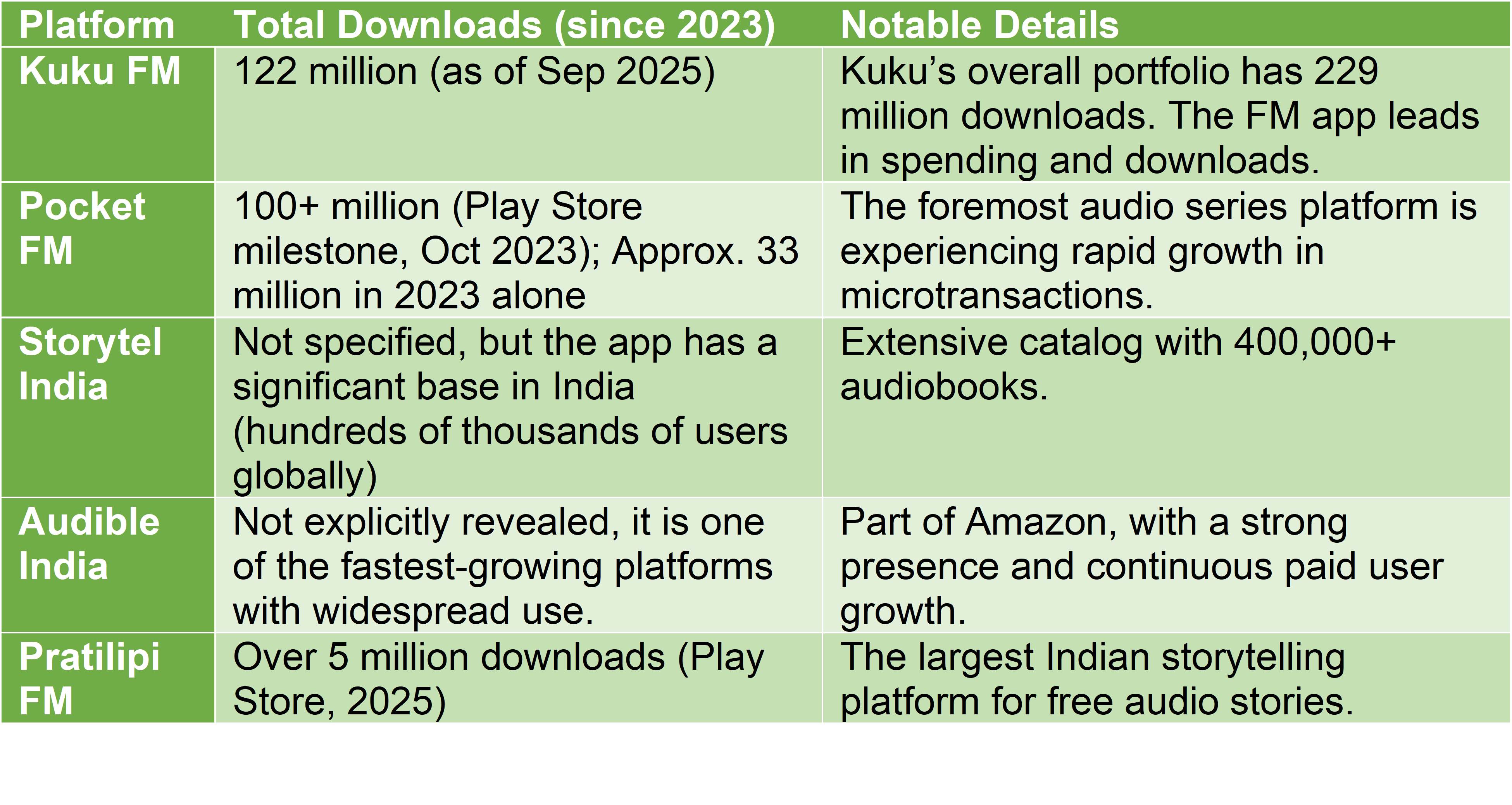
Appfigures data cited in coverage shows Kuku’s download and in-app spending growth has been dramatic this year, likely more than 229 million cumulative downloads across apps (122m Kuku FM, 88m Kuku TV), with 2025 seeing >134 million downloads (a 533 percent year-over-year jump) and consumer spending that pushed past $4 million cumulatively.
Those numbers underline an essential point: while the top-line consumer demand is real, converting downloads into meaningful ARPU (Average Revenue Per User) at scale remains the structural challenge for Indian creators and platforms.
The macro story: India’s mobile-first tailwind
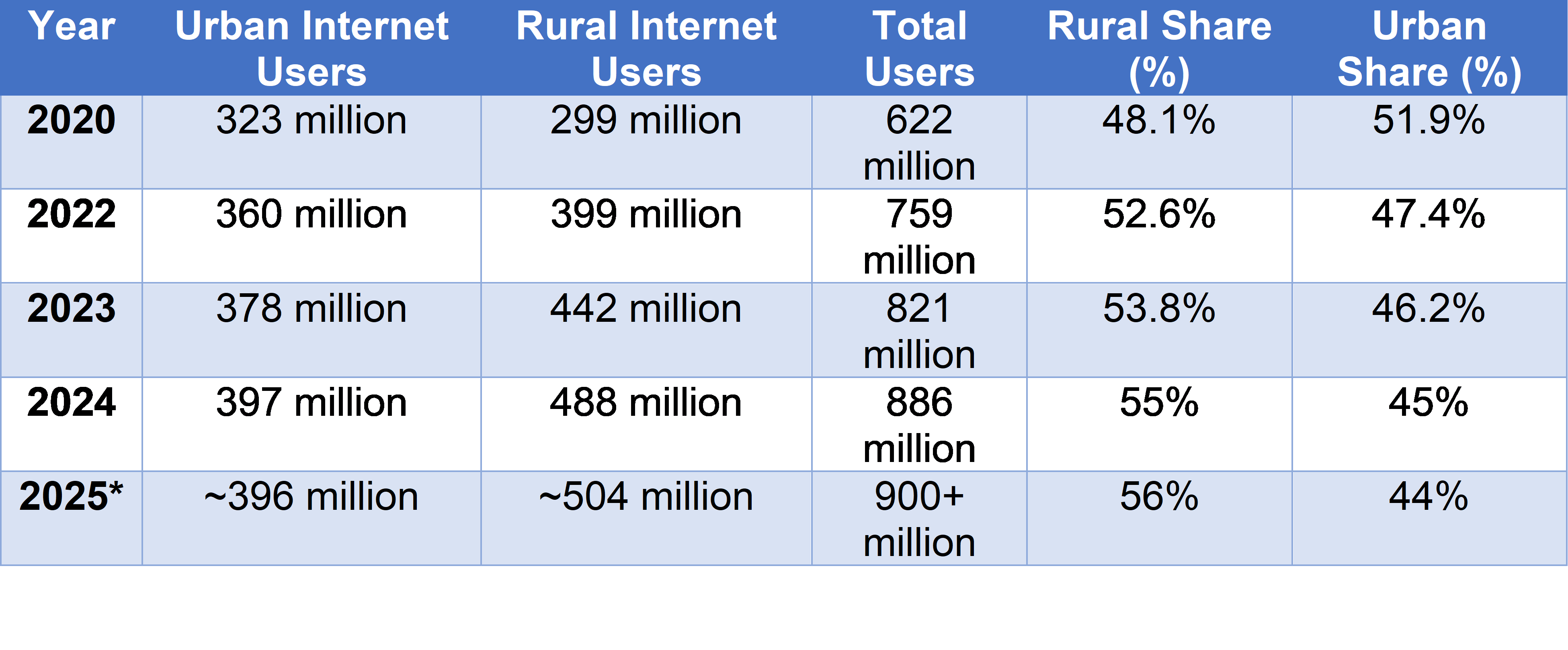
Two structural factors power this story. First, India is now essentially a billion-person internet market. The Telecom Regulatory Authority of India (TRAI) and industry trackers show the subscriber base hovering around 950–970 million internet subscribers in 2024–25, with smartphone penetration north of several hundred million users. This scale guarantees large addressable audiences for vernacular, mobile-native formats.
Second, ultra-low data prices and seamless micropayments (UPI) make distribution and monetisation far easier than for similar markets a few years ago. Founders and investors repeatedly point to those two dynamics as the reason global platforms and local startups are doubling down on regional-language, short-format content.
EY’s industry analysis provides the larger context. Digital media overtook television in 2024 and will remain the fastest-growing segment of India’s media and entertainment industry through the middle of the decade. That creates an environment where niche formats, audio-first storytelling, regional micro dramas, and devotional channels can scale quickly if they find product-market fit.
The competitors and the tactics: why this is a full-blown content war
Kuku is one of several startups jostling for leadership in vernacular audio and short, serialized video. Pocket FM remains the most direct rival, and the two have exchanged litigation and competitive barbs. Reports indicate that Pocket FM dominates in revenue, even where Kuku may have higher downloads, signaling different monetization footprints across platforms and geographies.
At the same time, big global platforms aren’t standing still: Instagram recently launched a microdrama push for Gen Z in India, and YouTube, Meta and others are experimenting with localized short serial formats. That mix of well-funded local rivals and global distribution platforms creates intense pressure on margins, user acquisition costs, and IP/copyright risk.
The numbers tell an instructive story. Pocket FM reportedly saw a fall in downloads year-on-year, even as its consumer spending grew strongly. This indicates higher ARPU or better monetization overseas. Meanwhile, Kuku’s downloads ballooned, but spending remained lower relative to Pocket FM. In short, scale is not equal to monetisation. Investors will want Kuku to close that gap.
Why micro dramas matter — and why they’re the likely “next big thing”
Microdramas, short, serialised video stories built for mobile viewing and often under two minutes per episode, have moved from experiment to category.
We can see why, and the reasons are quantitative as much as creative:
- Attention economics: Gen Z and young millennials process more and shorter content; several platform studies and executives argue that daily consumption patterns favor 60–120 second storytelling that delivers narrative resolution quickly. Platforms that capture repeat micro drama viewers can aggregate enormous daily watch time without the distribution friction of long-form TV.
- Cost curve and creator supply: micro dramas are cheaper and faster to produce than hour-long series, and local creators — from small towns and vernacular markets — can be onboarded quickly. Kuku and several entrants report high percentages of creators coming from non-metro India, and new tooling (including GenAI-assisted writing, translation and dubbing) slashes production cycles. That expands supply and keeps content fresh.
- Platform play and monetization experimentation: companies that previously relied on gaming or other models (WinZO, Zupee) are pivoting into microdrama as an alternate retention and monetisation engine; Instagram, YouTube, and niche startups (ReelSaga, Kutingg from Balaji Telefilms and others) are launching microdrama programs and seed funding plays to own creator funnels. User metrics justify those moves: microdramas drive repeat sessions and have strong ad/brand-product placement potential because episodes are short, shareable and easy to A/B test.
- Data-led production: companies such as Kuku are building GenAI studios for translation, script assistance, and automated assets. Kuku says it uses AI as an assistant (titles, plots, thumbnails) rather than for autonomous content creation, and claims a high percentage of internal workflows are now AI-assisted. That allows rapid iteration on formats that work, in multiple languages, at scale. When combined with localized creator pools, this materially reduces time to market and cost per episode — a key competitive lever.
Where the risks are — and what to watch next
Monetisation gap. High downloads don’t equal high ARPU. Kuku’s growth in downloads is impressive, but comparative consumer spending metrics show the company still needs to lift conversion and per-user revenue to justify higher late-stage multiples. Appfigures-cited spending data and Kuku’s own FY24 public filings indicate progress in revenue but continued losses; investors will press for improvements in unit economics.
Copyright and IP. Pocket FM’s lawsuits against Kuku and court orders restraining episodes show IP risk is not theoretical — it can hit product launches and fundraising calendars. Kuku says it has manual review teams and is investing in detection tools; the new round is likely to bankroll further tech work here.
Global platforms and distribution. Instagram, YouTube and large social players have the distribution advantage; niche apps must be either indispensable to creators or offer differentiated monetization to survive. The winner will be the platform that balances creator economics, content exclusivity and easy monetization.
Bottom line: an $85m check, a fast clock, and a content category in motion
Kuku’s $85 million round buys time and scale. It validates that investors still see value in language-first, mobile-native storytelling, and it funds the obvious plays: creator payouts, AI tooling, celebrity-driven content and international experiments. But the core challenge is unit economics: turning deep engagement and huge download spikes into reliable revenue growth without eroding margins to unsustainable marketing spends.
Microdramas form the most interesting tactical front in that battle: they compress narrative, lower production cost, and scale rapidly across India’s multi-lingual market. That combination explains why incumbents, gaming companies and global platforms are simultaneously experimenting with the format.
If Kuku can use its creator network, AI tooling and the new capital to tighten monetisation and protect IP, it will be well-positioned. If not, the market’s entry fever and better-funded global rivals will quickly make this another winner-takes-most arena.
Stay ahead of the curve and follow IndiaTechDesk on Facebook, Twitter and Linkedin for in-depth news of market trends, funding updates, and regulatory changes affecting startups in India.
Read More:
- AWS and MeitY Startup Hub join Hands to Support Growth of Startups in India
- Salesforce Launches its First Program to Mentor Tech Startups in India
- Stripe Scripts its First Indian Acquisition with Recko
- 10 Best Free Plagiarism Checker For Indian Students
- Content Platform Rigi Secures $12.3 million in Fresh Funding