

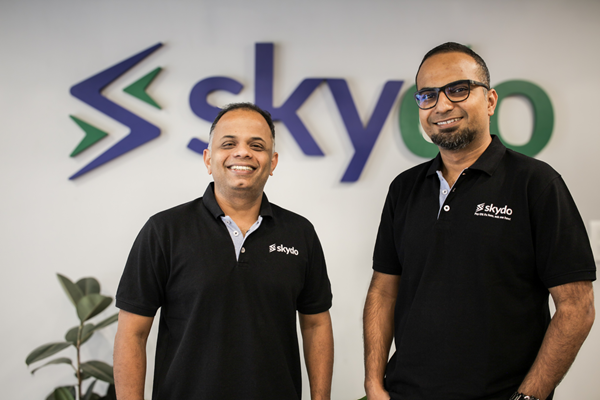
Skydo, a cross-border payments platform backed by Elevation Capital, recently secured a GIFT City license and RBI PA-CB framework approval this week, making the Bengaluru-based Indian fintech one of the first cross-border payments platforms in India to offer MSME exporters a fully compliant solution for both collecting international payments and sending money abroad.
Skydo, designed for Indian exporters, achieves results in India that no one else, including Stripe, PayPal, or Wise, can match. They have secured two crucial regulatory licenses simultaneously.
First, they obtained a Payment Service Provider (PSP) license at GIFT City’s International Financial Services Center (IFSC). Additionally, they received approval from the Reserve Bank of India under the PA-CB framework for outward remittances. With these licenses, the fintech startup is now one of the most comprehensively licensed operations in India.
It is for the first time that a homegrown Indian startup can now facilitate two-way money movement. It can collect payments from over 150 countries on behalf of Indian businesses and send payments to overseas vendors, software platforms, and global partners, all within a compliant framework regulated in India. Experts believe this development will change everything.
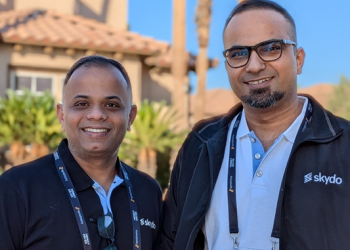
Srivatsan Sridhar, Co-founder and CEO of Skydo, told IndiaTechDesk, “GIFT City marks an important step in India’s ambition to build a globally competitive financial infrastructure. With PA-CB Outward approval and GIFT City In-Principle Authorization, we can support both sides of a business’s global payment journey in a simple, compliant way.”
“For MSMEs and digital-first businesses, this means better access to global payment corridors, improved currency management, and more efficient cross-border transactions, added Sridhar.
Why GIFT City Is India’s Hidden Masterstroke
To grasp the significance of what Skydo has just achieved, it’s essential to understand GIFT City. Officially known as the Gujarat International Finance Tec-City, GIFT City represents India’s solution to a challenge that has long hindered its fintech sector.
Global giants like Stripe and PayPal have traditionally operated in India from a distance, using registrations in jurisdictions such as Singapore, Ireland, and the Cayman Islands. This allowed them to benefit from more flexible regulatory environments, an advantage that domestic Indian companies struggled to access.
GIFT City levels the playing field. Inspired by the standards of Singapore’s Monetary Authority and the UK’s Financial Conduct Authority, the International Financial Services Centre (IFSC) offers Indian fintechs access to multi-currency e-money accounts, global merchant acquisition, and regulatory standards aligned with international norms—all while remaining in India.
Skydo stands out as one of the first cross-border fintechs to obtain a PSP license from GIFT City. This achievement positions Skydo at the forefront of a significant financial infrastructure project that India has been quietly developing for years.
The Clock Was Ticking — Here’s Why Now
Skydo’s timing couldn’t be more strategic. The Indian fintech space is rapidly heating up, and the competition is fierce. Recently, rival fintech Xflow secured funding backed by Stripe and PayPal Ventures, meaning two of the world’s leading payment giants now hold stakes in an Indian cross-border payments competitor.
For Skydo, obtaining dual regulatory licenses is more than a compliance milestone; it is a significant advantage. This regulatory barrier creates a protective layer that foreign-backed competitors will need years to replicate.
In December 2025, Skydo raised $10 million in a Series A round from Elevation Capital and Susquehanna Asia Venture Capital, with a focus on regulatory infrastructure and new market entry. The announcement in May 2026 confirmed that Skydo deployed the capital on schedule, signaling its commitment to execution to investors.
At the same time, India’s largest banks, which have thrived for decades on fees from SWIFT-based wire transfers and foreign exchange markups, are starting to feel the pressure.
An investigation by Mint in April 2026 highlighted how major Indian banks are “feeling the heat” from the Reserve Bank of India’s expansion of the PA-CB framework. This update allows fintech companies to directly compete for the international transaction revenue that banks once monopolized.
A Full-Stack Play for 40,000 Indian Businesses
Before this week, Skydo focused solely on receiving international payments for Indian exporters. With the RBI’s PA-CB Outward license now in hand, the company can also send money abroad for overseas software subscriptions, vendors, and service providers. This dual approval transforms Skydo from just a collections tool into a comprehensive treasury platform for Indian businesses operating globally.
The potential here is massive. India aims for $2 trillion in exports by FY30, with MSMEs expected to contribute nearly 45 percent of that total. Currently, Skydo processes over $850 million in payments each year and supports more than 40,000 businesses across over 50 Indian cities.
Movin Jain, Co-founder of Skydo, said, “The combination of these frameworks brings greater regulatory clarity and flexibility for fintechs to build compliant and innovative products.” He also noted that as GIFT City evolves into a global financial hub, its multi-currency capabilities and aligned regulatory and risk standards will provide Indian businesses with a solid foundation for international expansion.
However, despite these regulatory victories, important questions linger. While the Fintech company handles $850 million annually, it has not disclosed any information about its profitability.
Maintaining two separate regulatory frameworks, one under the RBI PA-CB regime and another under IFSCA’s GIFT City rules, will likely increase compliance costs significantly. The key question remains whether Skydo’s zero-markup pricing model can absorb these costs and support its expansion into new markets, a topic that the recent press release notably avoids addressing.
What This Means for Global Fintech
The story behind Skydo’s recent PSP license in GIFT City is more significant than most reports suggest. It’s not just another corporate update; it reflects a shift in India’s long-term ambition to establish a robust onshore financial hub, much like Singapore. This moment signifies that homegrown companies in India’s fintech sector are gaining real traction and regulatory support.
Every license granted to an Indian fintech like Skydo makes it tougher for major foreign players like Stripe, Wise, or PayPal to maintain their hold on the Indian MSME cross-border payments landscape. Each approval that allows Indian fintechs to facilitate outward payments is a step away from involving foreign platforms, giving local businesses more control over their finances.
The competition over India’s massive $125 billion remittance corridor and the rapidly expanding B2B export payments market is heating up. This isn’t just a behind-the-scenes battle; it’s turning into a full-blown infrastructure war. With Skydo stepping up with such a powerful advantage under Indian law, they may have just fired the opening shot.
The real question now is whether they can withstand the pressure from better-funded international competitors in the coming months. For this Bengaluru startup, the journey is just beginning, and the stakes have never been higher.
Stay ahead of the curve and follow IndiaTechDesk on Facebook, Twitter and Linkedin for in-depth news of market trends, funding updates, and regulatory changes affecting startups in India.
Read More:
- How this Shopify Accelerator Startup is Assisting New Consumer Brands to Become Top Favorites During the Pandemic?
- India Needs More Neutral Colocation Space for Supporting AI Startups
- Kalaburagi Startup Hub Marks Bold Shift in India’s Agri-Tech Entrepreneurship
- Deeptech Startups India, Can Policy and Capital Deliver?
- Zepto IPO Filing Signals Quick Commerce Battle Moves to Public Markets