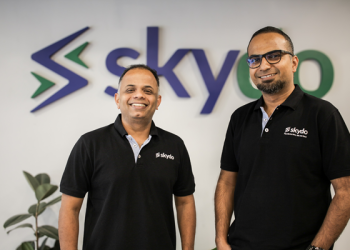


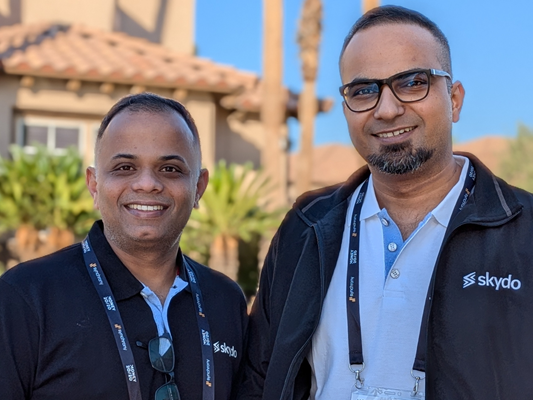
Skydo Technologies has received final approval from the Reserve Bank of India (RBI) to operate as a cross-border payment aggregator, positioning the fintech startup as the sixth licensed player in a tightly regulated market where Indian exporters and MSMEs increasingly demand seamless foreign currency transactions for cross-border payments. The Fintech firm raised $10 million in December, 2025.
The Reserve Bank of India granted Skydo a PA-CB license this week, following a 15-month process that began with initial clearance in October 2024. Consequently, the Bengaluru-based platform can now legally facilitate export payments for over 30,000 businesses across 50 Indian cities, processing transactions in 32 currencies.
This newly acquired license is essential in a world where the cross-border payments market is expected to surpass a staggering $42 trillion by 2026. India alone accounts for $83 billion in annual remittances, the largest share globally, making this approval a significant achievement.
Before Skydo, only five other companies had received RBI’s final approval: Adyen, Amazon Pay, Cashfree Payments, IndiaIdeas.com, and Pay10 Services. Meanwhile, 11 more companies are still waiting for their applications to be processed, highlighting the challenging regulatory landscape.
“The RBI authorization is a strong testament to our understanding of the Cross-Border Payments space, Compliance-first culture, secure systems and robust risk controls. This is a strong marker of trust for our customers and global bank partners, especially given India’s regulatory rigor and high bar for issuing such licenses, said Awadhesh Ranjan, Head of Risk & Compliance at Skydo.
Breaking Down the Regulatory Requirements
To operate as a Payment Aggregator Cross Border entity, companies must meet strict criteria. Fintech companies need a minimum net worth of INR 15 crore (approximately $1.8 million) at the time of application, which will increase to INR 25 crore ($2.9 million) by March 2026.
They also have to ensure that individual transactions do not exceed INR 25 lakh ($30,000), maintain separate accounts for different types of payments, and conduct all foreign currency activity through authorized dealer banks. Compliance requirements include KYC protocols, verification of export documentation, and mandatory reporting to India’s Financial Intelligence Unit.
“The RBI doesn’t hand out these licenses like candy,” said Srivatsan Sridhar, Skydo’s CEO and co-founder. “They scrutinize your compliance culture, risk management frameworks, and technical infrastructure for months. Getting final approval proves we built systems that protect both customers and India’s financial integrity.”
Additionally, licensed entities must cap individual transactions at INR 25 lakh ($30,000), maintain separate accounts for inward and outward payments, and route all foreign currency dealings through authorized dealer banks. Furthermore, platforms must implement KYC protocols, verify export documentation, and report to India’s Financial Intelligence Unit.
These regulations create barriers that benefit licensed companies like Skydo, especially as enforcement in the fintech space becomes stricter.
Why MSMEs are Driving this Opportunity
The challenge of cross-border payments is particularly acute for India’s 50 million micro, small, and medium enterprises (MSMEs), which contribute significantly to the country’s GDP and exports. Many of these businesses struggle to navigate the complexities of international payments.
Traditional banking options often involve high fees, long transfer times, and extensive paperwork, making the process cumbersome.
”We watched our family’s automotive export business lose a lucrative Turkish contract because we couldn’t reliably receive payments,” Sridhar explained, recounting the personal frustration that sparked Skydo’s founding in March 2022. “That pain point affects thousands of Indian businesses trying to compete globally.”
As India aims to become a $5 trillion economy by 2027, improving cross-border payment systems is crucial to achieving this goal. The B2B payments market in India is also projected to reach $10-11 trillion by fiscal 2026, with cross-border transactions playing a vital role in this growth.
How Skydo Differentiates through Technology
Skydo’s approach to technology sets it apart from competitors who often rely on pre-existing infrastructures. In partnership with DBS Bank, Skydo has built its own comprehensive technology stack that allows for direct foreign currency conversions. This unique capability offers significant advantages for their customers.
The platform provides Indian exporters with virtual USD, EUR, GBP, and CAD foreign currency accounts, enabling international clients to pay locally without SWIFT fees. Skydo converts funds using live interbank exchange rates with zero markup, a stark contrast to PayPal’s 4.4 percent transaction fee plus 3-4 percent currency conversion charge.
”Most fintech startups in cross-border payments are basically reselling someone else’s API,” noted a venture capital investor who requested anonymity. “Skydo actually owns the rails, which gives them pricing flexibility and control over user experience that matters long-term.”
Moreover, the platform streamlines the process by automating the issuance of Foreign Inward Remittance Certificates and delivering them within 24 hours at no extra cost. This eliminates the cumbersome process that typically requires in-person visits to the bank.
Skydo also settles funds directly into Indian bank accounts in INR within one business day, a significant improvement over the traditional banking system’s 3-7-day processing time.
Funding Trajectory Signals Investor Confidence
Skydo raised $10 million in a Series A round led by Susquehanna Asia Venture Capital in December 2025, bringing total equity funding to $20 million. Elevation Capital, which led the seed and pre-Series A rounds, doubled down as a repeat investor, a signal of sustained conviction in the business model.
The Series A funding will fuel geographic expansion into 20+ new countries across Southeast Asia, the Middle East, Africa, and Latin America. Additionally, Skydo plans to introduce credit facilities for exporters, expand tax compliance services, and strengthen card infrastructure while pursuing international licenses.
Payment volume grew fourfold over the past year, with Skydo processing over $250 million in annual volume. The company targets $5 billion in annualized volume by 2027, requiring roughly 10x growth over 18-24 months.
Licensed Players vs. Unlicensed Operators
The PA-CB license creates a clear dividing line in India’s cross-border payments ecosystem. Licensed fintech startups gain legitimacy with enterprise customers, banking partners, and regulators, while unlicensed operators face existential uncertainty.
Razorpay, PayGlocal, Pine Labs, and Cashfree compete in adjacent spaces with varying business models. However, each licensed Payment Aggregator Cross Border platform targets slightly different customer segments and use cases.
Skydo focuses squarely on MSMEs, freelancers, and digital businesses with 20-40 employees, deliberately avoiding enterprise complexity to maintain product simplicity. This strategic focus allows the platform to optimize for the specific pain points Indian exporters face when collecting payments from international clients.
Global players like Wise and Payoneer bring brand recognition but often lack India-specific compliance features and local customer support that MSME businesses require. In contrast, Skydo’s zero-markup forex pricing and flat-fee structure ($19-29 per transaction) make it particularly cost-effective for mid-to-high value B2B transactions.
The Bigger Picture for India’s Fintech Ecosystem
Skydo’s regulatory approval reflects broader trends reshaping India’s financial infrastructure. The RBI’s active regulation of cross-border payments signals a determination to balance innovation with financial system integrity as digital transactions explode.
India’s fintech sector will attract $5-7 billion in annual funding through 2027, with payments-focused startups attracting the most investor attention. The median deal size now exceeds $4 million, indicating maturation from seed-stage experimentation to scaled growth capital.
For founders building in adjacent spaces, Skydo’s journey offers lessons about regulatory strategy. The company invested heavily in compliance infrastructure before achieving product-market fit, a counterintuitive approach that delayed revenue growth but created long-term competitive advantages.
Stay ahead of the curve and follow IndiaTechDesk on Facebook, Twitter and Linkedin for in-depth news of market trends, funding updates, and regulatory changes affecting startups in India.
Read More:
- Wiom Raises $17 Million in Series A Round to Democratize Affordable Internet Access in India
- Travel Fintech Startup Scapia Bags $23 Million in its Series A
- Funding Winter Forces Indian Startups to LayOff Thousands Amid Economic Downturn
- Y-Combinator backed SaveIN Secures $8 million Over Nine Months
- Funding Winter Chills Indian Startups, Valuations Slide as Unicorns Dwindle